
Stop Texting at the Curb: The $15 Wireless Doorbell Hack
You are sitting at the curb, engine idling, staring at your phone. You send the mandatory “I’m here” text. Then you wait. Did they see it? Is their phone on silent? Five minutes pass, and you’re tempted to honk, but you don’t want to be that neighbor. This digital friction is a silent productivity killer, and frankly, it’s a nuisance. The solution isn’t another app or a more expensive smartphone. The answer is a dead-simple Carpool Hack involving a $15 non-WiFi wireless doorbell.
The Death of the “I’m Here” Text
We have over-engineered our lives. Relying on a cellular network, a cloud server, and a recipient’s notification settings just to say you’ve pulled into the driveway is overkill. It’s also unreliable. Dead zones, silent modes, and “Do Not Disturb” settings make the simple act of a pickup feel like a coordinated tactical strike.
Radio frequency (RF) technology is the unsung hero here. A basic wireless doorbell doesn’t need your home network. It doesn’t need a data plan. It just needs a battery and a plug. By moving the trigger into the car and the chime into the house, you create a dedicated, zero-lag signaling system that works every single time.
Why Low-Tech Beats High-Tech
- Zero Latency: The moment you hit that button in your cup holder, the chime sounds in the kitchen. No 30-second delay while the text travels through space.
- Universal Accessibility: It’s perfect for grandparents who struggle with smartphone notifications or kids who aren’t allowed to have phones yet.
- No Notification Fatigue: A doorbell chime is a distinct, physical sound. It doesn’t get lost in the sea of Instagram pings and email alerts.
- Budget Friendly: You can find these units for $10 to $15 at any hardware store or online retailer.
The Rainy Tuesday Revelation
I’ll never forget a particularly nasty Tuesday last November. The rain was coming down in sheets—the kind of sideways rain that makes you dread stepping out of the car. I was picking up my daughter from her grandmother’s house. Usually, I’d text, wait for my mother-in-law to see it, and then wait another three minutes for my daughter to put on her shoes.
That day, I reached into my center console and pressed the small plastic button I’d Velcroed there. Inside the house, a pleasant chime echoed through the hallway. Before I could even put the car in park, the front door swung open. My daughter was already on the porch, umbrella in hand. No wet phone screen, no frustrated waiting. Just a $12 piece of plastic making a connection that felt almost telepathic. It was the most satisfying pickup of the year.
Setting Up Your Command Center
Implementation is trivial. Buy a standard wireless doorbell set (ensure it has at least a 200-foot range). Plug the chime unit into a central area of the host’s home—the kitchen or the living room works best.
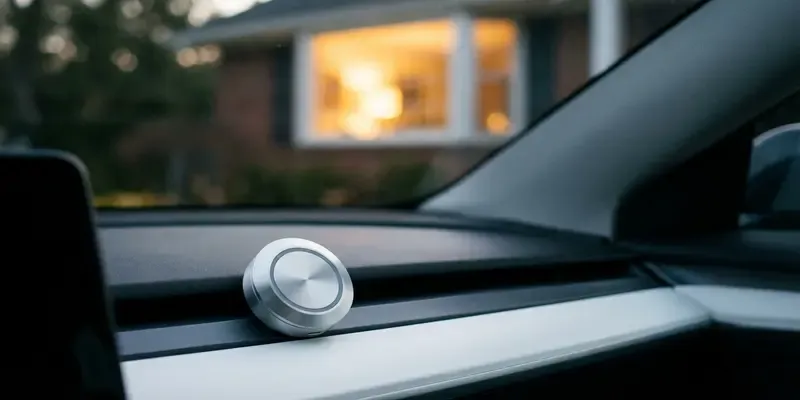
Keep the remote button in your car. Use a small piece of 3M Command strip to mount it to your dashboard or simply tuck it into the sun visor. When you roll up to the house, give it one firm press. You’ve just reclaimed five minutes of your life and eliminated the stress of the “waiting game.”
Who Needs This Hack?
This isn’t just for parents. It’s for anyone who manages a frequent, recurring pickup.
- Elderly Care: If you’re picking up an aging parent for appointments, the chime is far easier for them to hear than a vibrating phone in a purse.
- Carpool Commanders: If you’re the designated driver for the neighborhood kids, this is your new best friend.
- Rural Residents: In areas with spotty cell service, this RF signal is a literal lifesaver.
Conclusion
We don’t need more complex software to solve our daily friction; we need smarter applications of simple hardware. The wireless doorbell hack is a testament to the power of low-tech solutions in a high-tech world. It’s cheap, it’s effective, and it respects everyone’s time.
Your Turn: Grab a doorbell this weekend and gift it to the person you pick up most often. It’s the best $15 you’ll ever spend on your sanity.
FAQs
Q: Will the signal reach from my car to the back of the house? Most modern wireless doorbells have a range of 500 to 1,000 feet. Even with walls and a car door in the way, a 300-foot rated doorbell will easily cover a standard driveway-to-kitchen distance.
Q: Do I need WiFi for this to work? No. Look specifically for “non-WiFi” or “RF” doorbells. They use radio frequencies to communicate directly between the button and the chime.
Q: What if my neighbor has the same doorbell? Most units allow you to change the frequency or “code” so you don’t accidentally set off their chime. Check the manual for a small switch or a pairing button.
Q: Will the battery in the button die quickly in the car? These buttons use very little power. A standard CR2032 battery usually lasts 1-2 years, even with daily use. Extreme heat or cold might shorten it slightly, so keep a spare in the glovebox.
Q: Is it okay to leave the button in a hot car? Yes, standard wireless doorbells are built to withstand outdoor temperatures. However, mounting it out of direct sunlight (like under the dash) will help the plastic and battery last longer.
Q: Can I have multiple buttons for different cars? Absolutely. Most systems allow you to pair multiple buttons to a single chime. You can have one for Mom’s car and one for Dad’s, often with different ringtones for each.


