
You are halfway through your favorite chocolate chip cookie recipe. The oven is preheating, the butter is perfectly creamed, and you reach for the brown sugar. But instead of soft, sandy goodness, you find a fossil. You grab a knife. You grab a hammer. You start chipping away like a desperate archaeologist.
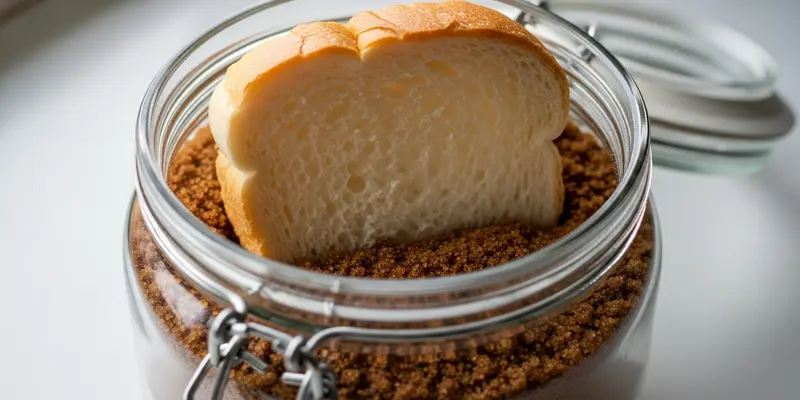
Stop it. Stop fighting your food. The solution to the brick-hard brown sugar problem isn’t a power tool or a fancy kitchen gadget. It is a single slice of sandwich bread.
Why Your Sugar Turns Into a Weapon
Brown sugar is just white sugar coated in molasses. That molasses is a film of liquid gold that gives the sugar its moisture and depth. However, the moment you open that bag, the air starts stealing that moisture. The molasses dries out, the sugar crystals glue themselves together, and suddenly you have a culinary cinderblock.
Most people try to solve this with heat. They microwave it with a wet paper towel, which works for about five minutes before the sugar cools and becomes even harder than before. It’s a temporary fix for a permanent problem. You don’t need heat; you need a slow, consistent moisture exchange.
The Bread Trick: Simple, Cheap, Effective
Here is the play: take a standard slice of white bread—the cheaper, the better—and tuck it right into the container with your hardened sugar. Seal the lid tight.
Within 24 hours, something magical happens. The hygroscopic nature of the sugar begins to pull the moisture out of the bread. The bread will become a crouton; the sugar will become soft, fluffy, and scoopable.
- Efficiency: No need to soak terra cotta bears.
- Cost: It costs pennies.
- Maintenance: Just swap the bread when it gets completely dry.
A Tale of Holiday Heartbreak
I remember Thanksgiving 2018 vividly. My kitchen smelled like roasting turkey and impending doom. I had a bowl of softened butter waiting for its dark sugar counterpart, but my sugar bag felt like it had been pulled from a limestone quarry.
I spent twenty minutes hacking at it with a butter knife, sweat dripping off my nose, until my wrist throbbed. I ended up with sugar shrapnel all over the floor and a recipe that tasted like frustration. I had to go to the store at 4 PM on a holiday because I couldn’t get a cup of sugar out of a five-pound bag. That was the day I surrendered to the bread method. I haven’t picked up a knife to attack my sugar since.
Take Back Your Pantry
We overcomplicate the kitchen. We buy specialized containers and chemical desiccant packs when the answer is usually sitting on our counter. This isn’t just a “hack”—it’s a fundamental understanding of how ingredients interact.
Go to your pantry right now. If your brown sugar feels even slightly firm, throw a slice of bread in there. Don’t wait until you’re in the middle of a baking emergency to fix a problem that takes five seconds to prevent. Your wrists (and your cookies) will thank you.
FAQs
Q: Won’t the bread get moldy inside the sugar? No. Sugar is a natural preservative. It pulls the moisture out so effectively that the bread dries out far too quickly for mold to take hold, provided your container is airtight.
Q: What kind of bread works best? A simple slice of white sandwich bread is best because it lacks strong flavors or seeds that might migrate into your sugar.
Q: Can I use something else if I’m out of bread? Yes. A couple of large marshmallows or a few apple slices work similarly, though apples can occasionally transfer a slight scent to the sugar.
Q: How long does the bread last? Usually, the bread will stay effective for a few weeks to a month. Once it feels like a hard rock, swap it out for a fresh slice.
Q: Does this work for white sugar? No. White sugar hardens for different reasons (usually too much moisture, not too little). This trick is specifically for brown sugar which needs to stay hydrated.
Q: Does it matter if the bread touches the sugar? Not at all. You can place it right on top. The sugar won’t stick to the bread in a messy way; it just performs its moisture-wicking duties silently.