
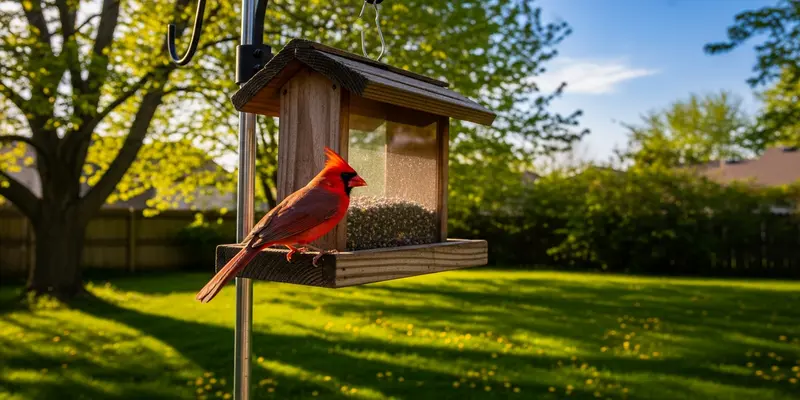
You have spent fifty dollars on premium sunflower seeds. You sit down with your morning coffee, expecting a cardinal or a chickadee to grace your yard. Instead, you get a furry acrobat doing pull-ups on your feeder pole. It is frustrating. It is expensive. And quite frankly, it is war. But you do not need a high-tech security system or toxic deterrents to win this battle. All you need is a $3 can of non-stick cooking spray.
The Problem with Traditional Deterrents
Most homeowners go through a predictable cycle of grief. First, they buy the expensive plastic baffles that squirrels eventually leap over. Then, they look into chemical repellents that smell like rotten eggs and make the backyard unbearable for humans too. Worse yet, some people resort to axle grease, which is a nightmare for the environment and can actually harm a bird’s feathers if they come into contact with it.
We need a solution that is cheap, effective, and—most importantly—food-safe. If it is safe enough for your omelet, it is safe enough for your backyard ecosystem.
Why Cooking Spray is the Ultimate Equalizer
Non-stick cooking spray is the silent hero of the DIY world. It creates a frictionless surface that defies the laws of squirrel physics.
- It is Food-Safe: Unlike industrial lubricants, vegetable-based sprays won’t poison the local wildlife.
- It is Transparent: No ugly black grease streaks on your decorative poles.
- It is Cheap: One can usually lasts an entire season.
The Day I Reclaimed My Yard
I remember my first summer in my current home. I had installed a beautiful cedar feeder, and within three days, a squirrel I nicknamed “Lebron” had mastered the vertical climb. I tried bird-safe grease—it turned into a sticky, grey mess within a week. I tried mixing cayenne pepper into the seeds—Lebron seemingly developed a taste for spicy food.
One afternoon, out of pure desperation, I grabbed a half-used can of generic canola oil spray from the pantry. I wiped the pole down and coated it like I was prepping a Bundt pan. Ten minutes later, Lebron made his move. He hit the pole at a full sprint, reached the “lubricated zone,” and slid down with a look of utter confusion. It was like watching a cartoon character hit a banana peel. I didn’t just save my birdseed; I won back my dignity.
How to Apply It Correctly
To make this hack work, you have to be tactical. Do not just spray the whole pole and call it a day.
- Clean the Pole First: Wipe away any existing dirt or old grease. Friction is the enemy here, but so is grit.
- Focus on the “Launch Zone”: Apply the spray heavily from the middle of the pole up to just below the feeder.
- Reapply After Heavy Rain: While some oils cling well, a torrential downpour will eventually wash it away. Check it once a week.
A Better Way to Coexist
We do not hate squirrels; we just hate paying for their all-you-can-eat buffet at the expense of our birds. By using a food-safe lubricant, you are seting a boundary without causing harm. It is the most elegant, cost-effective solution for any bird lover on a budget.
Stop overthinking your backyard defense. Go to your pantry, grab that can of spray, and watch the gymnastics show begin.
FAQs
Will non-stick cooking spray hurt the birds?
No. Since it is a food-grade vegetable oil, it is non-toxic. However, you should only apply it to the pole, not the feeder itself, to ensure birds do not get oil on their feathers.
How often do I need to reapply the spray?
Typically, once every one to two weeks, or immediately after a heavy rainstorm. If you see a squirrel successfully climbing, it is time for a fresh coat.
Does it work on wooden poles?
It is most effective on metal or PVC poles. Wood is porous and will absorb the oil, making it less slippery over time. For wooden posts, a physical baffle is still your best bet.
Will the oil attract ants or other insects?
In my experience, no. Most cooking sprays use refined oils that do not have a strong scent or high sugar content, making them unappealing to insects.
Can I use expired cooking spray?
Absolutely. In fact, this is a great way to use up that can of spray that has been sitting in the back of your cabinet for three years.
Is there a specific brand that works best?
Any generic non-stick spray (canola, vegetable, or olive oil) works fine. The cheaper, the better—there is no need to use the expensive high-heat butter-flavored stuff!