
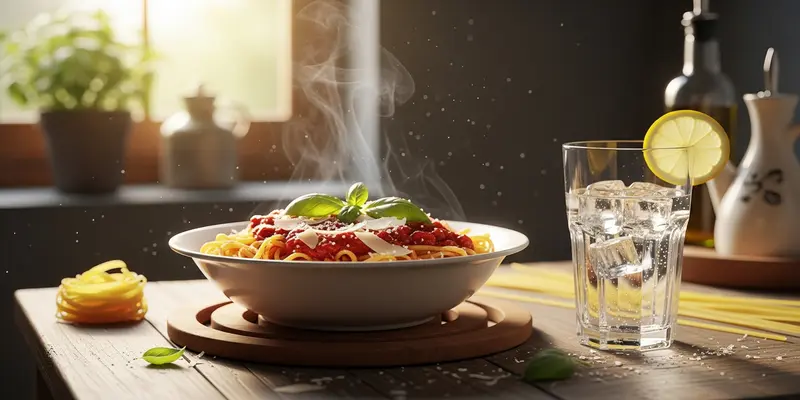
You’re standing in your kitchen at 9:00 PM, starving after a long shift. You pull that container of yesterday’s fried rice or penne alla vodka from the fridge, toss it in the microwave, and wait. Two minutes later, you’re met with a culinary crime: a plate of shriveled, pebble-like grains and pasta with the texture of a pencil eraser. This is the moment most people give up on leftovers, but the fault isn’t the food—it’s your technique. It’s time you mastered The ‘Splash of Water’ Rule.
The Physics of the Moisture Thief
Microwaves are not ovens; they are molecular agitators. They work by sending waves that specifically target water molecules, causing them to vibrate at insane speeds. This friction creates heat.
When you reheat starches like rice or pasta, the microwave essentially turns the internal moisture into steam. Because your container usually isn’t sealed perfectly, that steam escapes. You’re left with a dehydrated, starch-locked mess. To win, you have to provide a sacrificial lamb: extra water.
How to Execute the Rule
Stop just hitting ‘Start’ and hoping for the best. Follow these steps to save your dinner:
- The Splash: Add one to two tablespoons of water per serving. Don’t drown it; just moisten the surface.
- The Shield: Cover the dish. Use a microwave-safe lid (cracked slightly) or a damp paper towel. This traps the steam you’ve just created.
- The Stir: Heat in 45-second bursts. Stirring redistributes the moisture and prevents the dreaded ’lava edges, frozen center’ syndrome.
The Day I Stopped Eating Cardboard
I learned this the hard way in my first studio apartment. I had a microwave that sounded like a jet engine and a bank account that only allowed for bulk pasta. For months, I choked down leftovers that felt like eating bark.
One Tuesday, a friend saw me struggling and literally slapped the ‘Start’ button out of my hand. She took an ice cube, nestled it into the center of my spaghetti, and covered it with a plate. The result? It tasted like it had just come off the stove. The ice cube didn’t even melt all the way, but the steam it released rehydrated the starch perfectly. I never looked back.
Why This Matters for Your Health (and Wallet)
We throw away billions of pounds of food every year because it ‘doesn’t taste good the next day.’ That’s a waste of money and resources. By using the The ‘Splash of Water’ Rule, you aren’t just improving a meal; you’re adopting a sustainable habit. You’re giving that $15 takeout or that hour of Sunday meal prep the respect it deserves. Better texture leads to better satisfaction, which stops you from ordering a second pizza out of frustration.
Final Thoughts
Don’t let your microwave bully your lunch. A simple splash of water acts as a thermal buffer, ensuring your starches stay pillowy and your pasta stays al dente. Life is too short for crunchy rice.
Next time you reach for that plastic container, grab the tap first. Your taste buds will thank you.
FAQs
Q: Can I use butter instead of water? No. While butter adds flavor, it doesn’t provide the steam necessary to rehydrate the starch molecules. Use water first, then add butter after.
Q: Does this work for pizza? Actually, yes. Placing a small glass of water in the microwave next to your pizza slice helps keep the crust from turning into a rock.
Q: Should I use hot or cold water? Cold tap water is fine. The microwave will heat it to steam temperature in seconds anyway.
Q: Is a damp paper towel better than a lid? For rice, a damp paper towel is superior because it provides direct moisture contact across the entire surface area.
Q: Does this rule apply to mashed potatoes? Absolutely. Mashed potatoes benefit even more from a splash of milk or water to regain their creamy consistency.
Q: Why does my rice still get hard even with water? If it’s still hard, you likely didn’t cover it well enough. The steam must be trapped to do its job; otherwise, it just disappears into the microwave vent.