
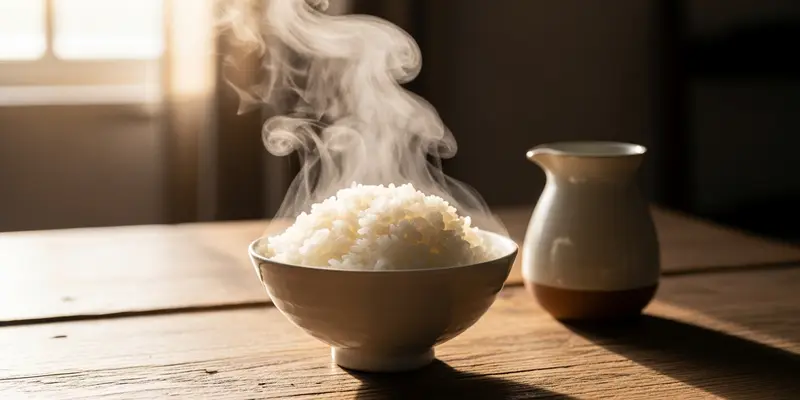
You are staring at a bowl of day-old rice. It is a cold, crystalline brick of disappointment. You know exactly what happens next: you hit “Start” for two minutes, and you emerge with something resembling gravel. Most people accept this as the tax for convenience. I refuse. The Splash of Water Method is the only thing standing between you and a depressing, crunchy dinner.
Why Your Microwave Is a Moisture Thief
Microwaves are efficient, but they are brutal. They work by vibrating water molecules, which generates heat. In the case of rice and pasta, those molecules are already locked in a starch matrix that has undergone “retrogradation”—a fancy way of saying the starch has turned into a hard, crystalline structure as it cooled.
When you reheat these starches without intervention, the microwave sucks out whatever residual moisture is left. You aren’t cooking the food; you’re dehydrating it. This is why your spaghetti turns into rubber bands and your basmati turns into birdseed.
The Technique: Steam, Don’t Scorch
The fix is offensively simple, yet most people skip it because they’re in a rush. To win at leftovers, you need to create a micro-sauna inside your microwave.
- The Splash: Add roughly one teaspoon of water per cup of rice or pasta. You aren’t making soup; you’re providing a sacrificial lamb of moisture.
- The Seal: This is non-negotiable. Cover the bowl with a damp paper towel or a microwave-safe lid. If you leave it open, the steam escapes and your efforts are wasted.
- The Heat: Go for 60-second intervals. Stirring halfway through ensures that the steam penetrates the center of the starch mass.
A Lesson from Mrs. Rossi
I remember my first solo apartment in a drafty corner of the city. I was living on day-old penne and pride. One evening, a neighbor—a formidable woman named Mrs. Rossi—saw me scraping dried-out, crusty noodles into the trash chute in the hallway. She didn’t offer a greeting; she offered a critique.
“You’re killing the grain,” she barked, gesturing at my bowl. She dragged me back into her kitchen, grabbed a bowl of my own sad leftovers, flicked a few drops of water onto it with her fingertips, and threw a heavy ceramic plate over the top. When the timer dinged, that pasta didn’t just look better—it smelled like it had just been strained. The steam had unlocked the starch, making it supple and silky again. I haven’t used a dry microwave since.
Reclaim Your Kitchen Standards
There is no nobility in eating bad food just because it’s convenient. Taking five seconds to add a splash of water is an act of self-respect. It transforms a “sad desk lunch” into a meal that actually nourishes you. Stop punishing yourself with dried-out grains. Use the steam.
If you’ve been suffering through crunchy rice, try this tonight. Your palate—and your digestion—will thank you.
FAQs
Does this work for pasta with sauce already on it?
Absolutely. The water mixes with the sauce and prevents it from thickening into a sticky paste while the noodles absorb the steam they need.
How much water is too much?
If you see a pool at the bottom of the bowl after stirring, you’ve overdone it. Start with a teaspoon; you can always add more, but you can’t take it away.
Should I use hot or cold water?
It doesn’t matter much, but hot water gives the microwave a head start in creating steam, which can slightly improve the texture of very old rice.
Can I use this for bread?
Yes, but be careful. A damp paper towel wrapped around a roll works better than a splash of water, which might make the bottom of the bread soggy.
Does the type of rice matter?
Brown rice and wild rice are even more prone to drying out than white rice. They actually benefit more from this method because of their fibrous hulls.
Why use a damp paper towel instead of a lid?
The damp paper towel provides its own moisture source and allows for a tiny bit of ventilation, which prevents the pressure from popping the lid off your container.