
We’ve all lived the same lie. You’re standing on a curb, the Uber is three minutes away, and your friend shows you a stunning shot they just took of the group. "That’s incredible," you say. "Send that to me!" They nod, eyes fixed on the screen. "Totally. I’ll send it tomorrow."
Spoiler alert: They won’t. Life happens. Notifications bury the intent. In the chaos of our digital lives, people often lose access to photos taken by friends at events because they wait too long to request them, leading to ’lost’ memories. It is time to kill the delay. It’s time for the Send It Now rule.
The Digital Black Hole is Real
Waiting is the graveyard of great photography. When you leave an event without a shared link, you aren’t just being patient; you’re being negligent.
Digital friction grows exponentially with time. Within twenty-four hours, that photo is buried under screenshots of work emails or memes. Within a week, it’s archived in a cloud service your friend rarely checks. By the time you remind them three months later, they’ve upgraded their phone and half their library is a mess of broken thumbnails.
Why the ‘Send It Now’ Rule Wins
- Momentum is your only ally. The emotional high of the event ensures everyone actually wants to share.
- Zero follow-up required. You shouldn’t have to nag your friends like a debt collector for a photo of your own face.
- Universal access. One link, one time, everyone wins.
Don’t be the person who sends a "Hey, remember that hike?" text six months too late. It’s awkward for you and a chore for them.
How to Execute the Instant Share
You don’t need a degree in IT to fix this. Before the last drink is finished or the coats are on, someone needs to step up as the Digital Architect.
- Create the Shared Album immediately. Whether it’s iCloud, Google Photos, or a dedicated app, do it while the music is still playing.
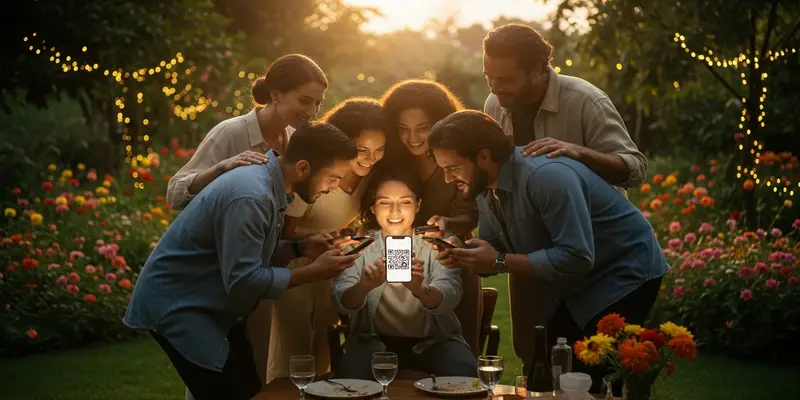
- Generate a QR Code. Most photo apps let you share a link. Throw that link into a free QR generator and let everyone at the table scan it.
- Make it a ritual. The event isn’t over until the link is live.
A Lesson from a Rain-Soaked Rooftop
I learned this the hard way three years ago in Brooklyn. It was my best friend’s 30th birthday on a rooftop bar. A sudden downpour turned the party into a beautiful, laughing mess. My friend Sarah captured the perfect shot: six of us huddled under a single tiny umbrella, mid-laugh, with the Manhattan skyline blurred by rain in the background. It was the photo of the decade.
"I’ll AirDrop it when I get home and have Wi-Fi," she promised. She never did. A week later, her phone took a swim in a puddle, the logic board fried, and that photo—the only one that captured the soul of that night—evaporated into the ether. I still think about that umbrella shot. It’s gone because we didn’t take thirty seconds to sync before leaving the roof.
Own Your Memories
We live in an age where we document everything but preserve nothing. We treat our digital libraries like trash heaps rather than archives. Taking a stand for your memories means being ’that person’ who insists on the shared link before the Uber arrives.
Don’t leave your history to chance. The next time you see a camera flash, remember: if it isn’t shared now, it doesn’t exist.
FAQs
Q: Isn’t it rude to pull out a phone to setup a link during a party? No. It takes thirty seconds and ensures the joy of the night lasts forever. It’s an act of service to the group.
Q: What if I don’t have enough data to upload right then? Create the shared folder and share the link immediately. The photos can upload when you hit Wi-Fi, but the connection between devices is already established.
Q: Which app is best for instant sharing? Google Photos and iCloud Shared Albums are the most reliable. For larger events, apps like Shared.Gallery or even a simple WhatsApp group can work in a pinch.
Q: How do I get less-tech-savvy friends to participate? Keep it simple. You create the link and ask them to ‘Add Photos.’ Don’t ask them to manage the settings; just give them a destination.
Q: Does this work for professional events too? Absolutely. If you’re networking and take a photo with a new contact, sharing it instantly via a QR code is a powerful way to cement the connection.
Q: What if people forget to upload to the link later? Since they already have the link in their history or open in a browser tab, the friction is 90% lower. A quick ‘bump’ text the next morning usually finishes the job.