
You open the fridge, stomach growling, and find that container of yesterday’s basmati or penne. You shove it in the microwave, hit two minutes, and wait. But when the timer dings, you’re met with a plate of salted gravel. Reheating starchy leftovers shouldn’t feel like a punishment, yet most of us accept dry, brittle textures as the cost of convenience.
It is time to stop settling for mediocre meals. The microwave is a moisture-thief, but you have the power to stop the heist.
The Science of the Crunch
Starch is a finicky beast. When rice or pasta cools, the molecules undergo a process called retrogradation. They crystallize, pushing out moisture and turning soft grains into tiny rocks.
When you stick those rocks back into a microwave, the radiation vibrates water molecules to create heat. If there is no surface moisture, the microwave simply sucks out what little hydration remains inside the grain. You aren’t just heating your food; you’re dehydrating it.
The 10-Second Moisture Miracle
Fixing this doesn’t require a culinary degree. It requires a sink.
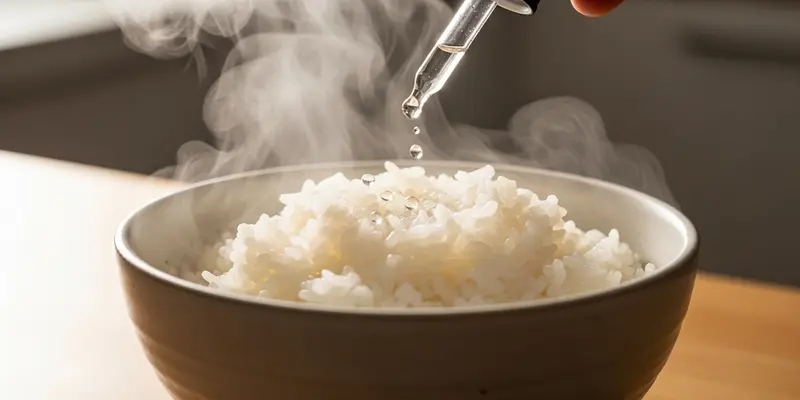
Before you hit start, add a tablespoon of water per cup of starch. Don’t just dump it in one spot; flick it across the surface. This creates a localized steam chamber inside your microwave.
- The Splash: A few drops of tap water.
- The Seal: Cover the bowl with a microwave-safe lid or a damp paper towel.
- The Steam: The heat turns that water into steam instantly, penetrating the starch and softening the crystals.
A Lesson from a Tiny Kitchen
I learned this the hard way during my first year living in a drafty apartment in Chicago. I was broke, exhausted, and surviving on bulk bags of jasmine rice. One Tuesday, I tried to reheat a massive bowl of leftovers that had sat in the fridge for two days.
It was so dry it literally crunched between my teeth. I was ready to throw it in the bin and go hungry. My neighbor, an elderly woman who had cooked for six kids for forty years, walked in, saw my pathetic plate, and laughed. She didn’t say a word—she just took the plate, flicked some water on it with her fingers, draped a wet paper towel over the top, and put it back in for forty seconds. It came out fluffier than the day I cooked it. I haven’t eaten dry rice since.
Why the Ice Cube Trick Works
You might have seen the viral trend of putting an ice cube in the center of your rice. It’s the same principle. The ice doesn’t actually melt completely; it provides a constant source of steam without making the rice soggy. Whether you use a splash of water or a frozen cube, the goal is humidity.
Don’t Forget the Fat
If you want to take your leftovers from “edible” to “restaurant quality,” add a tiny pat of butter or a drizzle of olive oil along with your water splash. The steam rehydrates the grain, while the fat coats it, preventing it from sticking together into a gelatinous lump.
FAQs
Q: How much water is too much? A: You aren’t boiling it again. Use about one teaspoon to one tablespoon per serving. You want steam, not soup.
Q: Does this work for gluten-free pasta? A: Absolutely. Gluten-free starches dry out even faster than wheat-based ones, making this hack even more essential.
Q: Should I stir the rice halfway through? A: Yes. If you’re heating a large portion, stir at the 60-second mark to ensure the steam reaches the bottom layers.
Q: Can I use broth instead of water? A: That is actually a pro move. Using chicken or vegetable broth adds a layer of flavor that water lacks.
Q: Why use a damp paper towel? A: The towel acts as a lid that breathes. It traps enough steam to hydrate the food but lets enough out so the dish doesn’t become a soggy mess.
Q: Does this work for pizza? A: It’s a different beast, but yes. Placing a small glass of water next to the pizza slice in the microwave keeps the crust from turning into leather.