
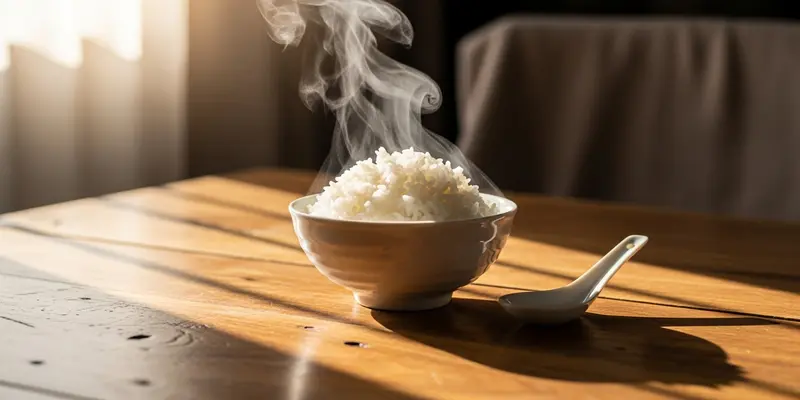
You open the fridge. There it is: a bowl of yesterday’s penne or a clump of cold jasmine rice. You’re hungry, but you’re also dreading that first bite of a rubbery, desiccated noodle or a rice grain that feels like a tiny pebble. Most people blame the microwave for ruining their food. They are wrong. The microwave isn’t the villain; your lack of moisture management is. To save your meal, you must master the Splash of Water hack.
The Physics of a Sad Lunch
When rice and pasta sit in the fridge, they undergo a process called starch retrogradation. The water molecules that made them fluffy and soft migrate out, leaving the starch granules hard and crystalline. If you just toss that bowl into the microwave as-is, the machine agitates the remaining moisture until it evaporates entirely. You aren’t just heating your food; you are essentially mummifying it.
To reverse this, you need to reintroduce humidity. You need steam. Steam is the bridge between a dried-out disaster and a meal that tastes like it was just pulled off the stove. It penetrates the starch crystals, softening them back into their original, pillowy state.
How to Execute the Perfect Reheat
Don’t just dump water in like you’re putting out a fire. Precision matters if you want to avoid a soggy mess.
- The Splash: Add one to two teaspoons of water per cup of food.
- The Seal: Cover the bowl with a microwave-safe lid or a damp paper towel. This traps the steam inside.
- The Power Play: Stop using the ‘High’ setting for everything. Drop your microwave to 70% power. This allows heat to distribute evenly without nuking the edges into jerky.
- The Stir: Every 60 seconds, pause and stir. This ensures the bottom layers get some of that steam action too.
The Day My Risotto Came Back to Life
I learned this lesson the hard way on a rainy Tuesday after a grueling 12-hour shift. I had a container of leftover saffron risotto—gold, creamy, and expensive. I was too tired to care, so I threw it in for three minutes on high. When the timer dinged, I pulled out a bowl of yellow gravel. It was heartbreakingly inedible.
I almost threw it in the trash, but my grandmother’s voice echoed in my head. She used to say, “Food is alive, you have to give it a drink.” I took a second portion, added a careful splash of water, draped a heavy, damp paper towel over it like a shroud, and let it spin slowly. Two minutes later, the aroma of garlic and butter bloomed in my tiny kitchen. The rice was creamy, velvety, and vibrant again. It wasn’t just food; it was a restoration of my own sanity.
Why Quality Matters
We live in a culture of waste, where we toss out perfectly good food because we don’t know how to treat it. Learning to reheat properly isn’t just a kitchen hack; it’s a form of respect for the ingredients and your wallet. A bowl of pasta is a terrible thing to waste. With a little steam and a little patience, you can turn a ‘sad desk lunch’ into the highlight of your afternoon.
Stop settling for crunchy rice. Take the extra five seconds to add some water. Your taste buds—and your soul—will thank you.
FAQs
Q: Won’t adding water make my pasta soggy? No, as long as you don’t overdo it. A teaspoon or two creates just enough steam to hydrate the surface without pooling at the bottom.
Q: Can I use olive oil instead of water? Oil adds fat and flavor, but it doesn’t create the steam necessary to soften hard starch. Stick to water for the hydration, then add oil after.
Q: Does this work for fried rice too? Absolutely. Fried rice actually needs this hack more than steamed rice because the grains are already coated in oil, which can make them even crispier (and harder) when cold.
Q: Should I use a plastic lid or a paper towel? A damp paper towel is actually superior because it releases a slow, even moisture into the air space of the bowl.
Q: What if I’m reheating a large amount of pasta? For large portions, use a wide, shallow dish rather than a deep bowl. This ensures the steam doesn’t have to travel as far to reach the center.
Q: Is it safe to reheat rice multiple times? Technically, you should only reheat rice once. Rice can harbor bacteria that survive cooking, and repeated temperature changes increase the risk of food poisoning.