
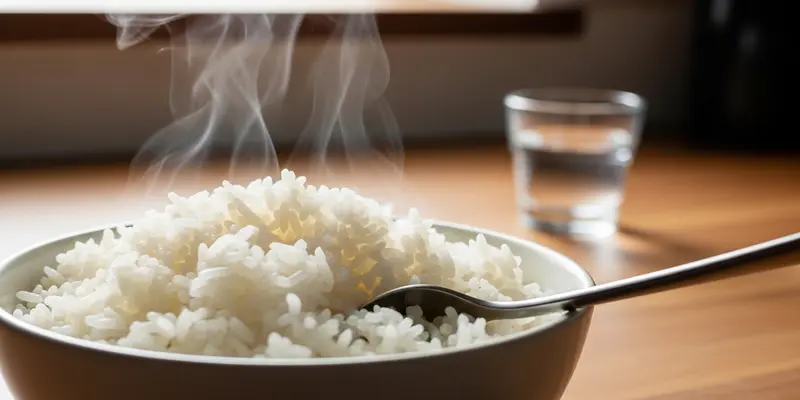
Look, we have all been there. You are starving, you have got a container of last night’s carbonara or fried rice, and three minutes later, you are chewing on something with the texture of a yoga mat. It is depressing. The reality is that Microwave reheating often leaves starches like pasta and rice dehydrated and unpalatable due to uneven moisture evaporation. Most people blame the machine, but the machine is just doing its job. You are the one failing the food.
The Physics of the Rubbery Mess
When you cook pasta or rice, the starch granules swell with water. When they sit in the fridge, they undergo a process called retrogradation—the starch recrystallizes and gets hard. When you throw it in the microwave without a plan, the waves vibrate the remaining water molecules so violently they turn to steam and escape immediately. You are literally dehydrating your dinner into a brittle grave.
If you want your food to taste like it just came off the stove, you have to play defense. You need to create a micro-environment that forces moisture back into those starch cells instead of letting it vanish into the microwave’s vent.
The ‘Splash’ Secret Explained
The solution is what I call the ‘Splash’ Secret. It is not rocket science, but it requires you to stop being lazy. Before you hit that ‘Start’ button, you need to do two things:
- Add the Splash: Add exactly one to two tablespoons of water to the dish. Don’t drown it; just give it enough to create a steam reserve.
- The Seal: Cover the dish tightly. A damp paper towel is the amateur move. A microwave-safe lid or a ceramic plate inverted over the bowl is the pro move.
You want to create a pressure cooker effect. This forces the steam back into the grain or the noodle rather than letting it evaporate.
Lessons from a Brooklyn Studio
I learned this the hard way during my first year living in a cramped Brooklyn studio. I was surviving on bulk-cooked rice and budget pasta. For months, I choked down crunchy, parched grains, thinking that was just the ’leftover tax’ you had to pay. One night, a neighbor—a retired chef who could smell my culinary despair through the thin walls—stopped me in the hallway.
"You’re killing that rice, kid," he told me. He dragged me into his kitchen and showed me the ice cube trick. He placed a single ice cube in the center of a mound of rice, covered it with parchment paper, and nuked it. The ice didn’t even fully melt, but the gentle steam it released transformed the rice into a fluffy, cloud-like pile. It was a revelation. It tasted better than the day it was made. I realized then that moisture isn’t just an ingredient; it’s a tool.
Stirring is Not Optional
Even with the splash, microwaves have ‘cold spots.’ If you just let the bowl sit there for three minutes, the edges will be molten lava and the center will be an ice block. Stop the timer halfway through. Stir the pasta. Redistribute that moisture you just added. This ensures the heat is even and the hydration is total.
Respect your food. You spent money on it, and you spent time cooking it. Don’t let a lazy reheating habit turn a great meal into trash. Use the splash, seal the heat, and eat like a human being again.
FAQs
Q: Does the splash trick work for gluten-free pasta?
A: It is actually even more critical for gluten-free pasta, which tends to dry out and shatter much faster than wheat-based noodles.
Q: Can I use butter or oil instead of water?
A: While fat adds flavor, it doesn’t create the steam necessary to rehydrate the starch. Use the water first, then add a little butter after it’s hot.
Q: Won’t the water make my pasta soggy?
A: Not if you use a ‘splash.’ A tablespoon or two will evaporate into steam; it won’t sit at the bottom like a soup unless you overdo it.
Q: What is the best cover to use?
A: A heavy ceramic plate that fits over your bowl is best. It creates a solid seal that traps the most steam.
Q: Should I use a lower power setting?
A: Absolutely. Reheating at 50% or 70% power for a longer time is always superior to blasting it at 100% and praying for the best.
Q: Why does my rice still have hard bits?
A: You likely didn’t stir it halfway through. Those hard bits are ‘cold spots’ where the starch hasn’t been properly re-hydrated by the steam.