
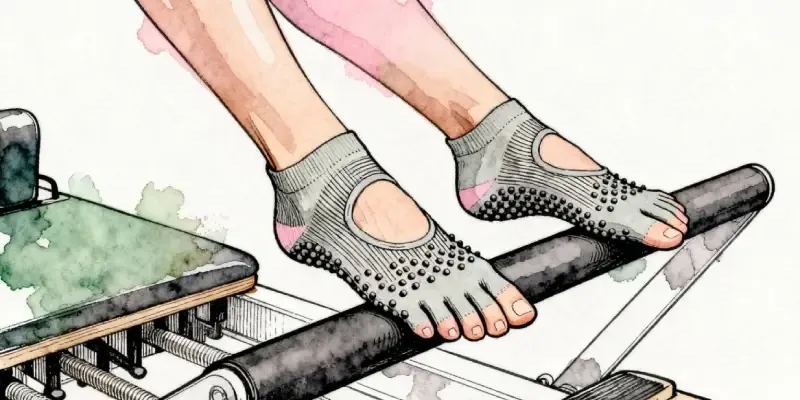
Pilates Beginner Gear Guide: Why Regular Socks Won't Cut It
By Sports-Socks.com on
More Than Just a Fashion Statement
Walking into your first Pilates class—whether Mat or Reformer—can be intimidating. While you might have your leggings and water bottle ready, there is one piece of equipment often overlooked by novices: grip socks. While many studios mandate them, beginners often wonder if they can just get away with their standard gym socks. The short answer is no. In this guide, we break down why specialized footwear is a technical necessity, not just an upsell at the front desk.
The Safety Imperative: Traction Control
- The Reformer Risk: The carriage of a Pilates Reformer is smooth and padded. Standard cotton socks act like skates on this surface, increasing the risk of groin strains or falling off the machine.
- Mat Stability: Even on a yoga mat, holding a plank or a “Down Dog” requires friction.
- Sweat Management: As feet sweat, regular socks lose whatever little grip they had.
- Injury Prevention: Grip socks stabilize the ankle joint by preventing micro-slips during transitions.
- Core Engagement: When you aren’t worried about slipping, you can fully engage your core and stabilizers.1
The Technical Anatomy of Pilates Socks
- Targeted Grip Patterns: It isn’t just about having sticky dots; it’s about where they are placed.
- High-quality socks place grips on the heel and the ball of the foot (metatarsal heads).
- Dynamic Movement: Ensures traction during lunges and single-leg work.
- Equipment Interaction: Provides purchase on the footbar and straps.2
- Hygiene and Health:
- Barrier Protection: Studios are high-traffic areas. Socks protect against common fungal infections like athlete’s foot.3
- Tactile Feedback: Many grip socks feature a “five-toe” design, allowing toes to spread naturally for better balance.
※ Material composition (cotton vs. bamboo) affects moisture-wicking capabilities.“In Pilates, your feet are your foundation. If your foundation is sliding, the integrity of the entire movement chain collapses.”
Definition List
- Plantar Proprioception
- The body’s ability to sense the position and movement of the feet, significantly enhanced by individual toe socks.
- Reformer Carriage
- The sliding platform on the Pilates machine where a significant portion of exercises are performed.
Comparison: Regular vs. Grip Socks
| Feature | Standard Cotton Sock | Professional Grip Sock |
|---|---|---|
| Friction Coefficient | Low (Slippery) | High (Silicone/Rubber) |
| Toe Movement | Restricted (fused) | Articulated (often 5-toe) |
| Hygiene Barrier | Porous | Density Knit |
| Studio Compliant | No | Yes |
| Activity | Suitability (Regular) | Suitability (Grip) |
|---|---|---|
| Reformer Lunge | Dangerous | Optimal |
| Plank Hold | Unstable | Stable |
| Strap Work | Slipping Hazard | Secure Fit |


