
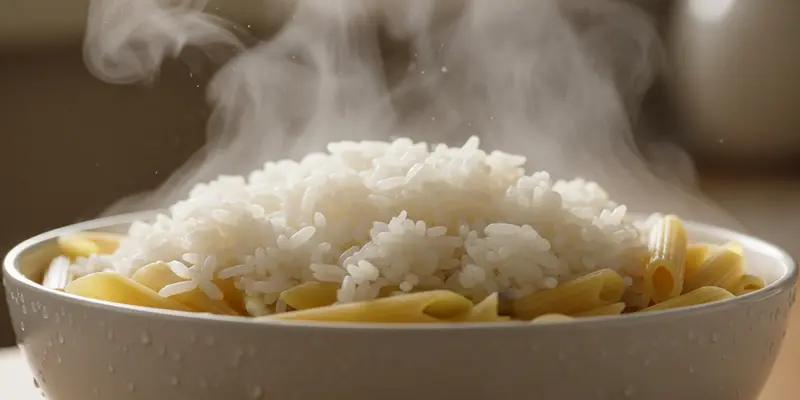
You pull the bowl out, stomach growling, only to find a sad heap of edible needles. We’ve all been there. You spent good money or precious time on that meal, but microwaving pasta or rice without a plan is a recipe for culinary heartbreak. It’s time to stop treating your microwave like a magic box and start treating it like the high-speed dehydrator it actually is. If you aren’t adding water before you hit ‘start,’ you’re doing it wrong.
The Physics of the Reheat Fail
Microwaves work by vibrating water molecules at insane speeds. This creates heat, but it also creates an exit strategy for moisture. When you reheat starch—like those leftover noodles or that clump of jasmine rice—the radiation aggressively evaporates the internal hydration that made the food soft in the first place.
Without an external source of moisture, the starch molecules crystallize. This process, known as retrogradation, is why your rice turns into tiny pebbles and your fettuccine feels like plastic. You aren’t just heating the food; you’re mummifying it.
The Steam Chamber Solution
To save your lunch, you need to transform your microwave into a makeshift steamer. Here is the non-negotiable protocol:
- The Splash: Add one tablespoon of water per cup of food.
- The Seal: Use a microwave-safe lid or a damp paper towel. Do not leave it open to the air.
- The Stir: If you’re heating a large portion, stop halfway through to redistribute the moisture.
By adding that splash of water, you’re providing a sacrificial lamb. The microwave attacks the loose water first, creating a pocket of steam that gently permeates the starches rather than stripping them dry.
A Lesson from the Bachelor Kitchen
I learned this the hard way back in my first studio apartment. I had a leftover container of what was once a glorious, creamy carbonara. I tossed it in for three minutes on high, no water, no cover. What came out was a fused brick of yellow wax. I actually tried to saw through it with a butter knife before giving up and eating a bowl of cereal.
The next night, I tried again with a fresh batch of rice. I remembered a tip from an old cook: I added a tiny splash of water and draped a wet paper towel over the top. The difference was night and day. The rice was fluffy, fragrant, and—most importantly—actually edible. I haven’t looked back since. It’s a five-second step that saves fifteen dollars worth of food.
Don’t Let Your Food Die Twice
We live in a world of waste, but your leftovers don’t have to be part of the statistic. Respect the grain. Respect the noodle. That small splash of tap water is the difference between a sad desk lunch and a meal that actually tastes like it did on night one.
Next time you’re standing in front of that glowing display, do the right thing. Add the water. Cover the bowl. Your taste buds (and your jaw) will thank you.
FAQs
1. How much water is too much?
You aren’t making soup. A single tablespoon per cup of rice or pasta is usually plenty. You want steam, not a puddle.
2. Can I use something other than water?
Absolutely. Using chicken broth, a splash of milk for creamy pastas, or even a bit of extra sauce will actually improve the flavor profile while adding moisture.
3. Should I use a lid or plastic wrap?
A lid is better, but leave it slightly cracked so the pressure doesn’t build up. If using plastic wrap, ensure it’s BPA-free and doesn’t touch the food directly.
4. Does the ‘ice cube trick’ work?
Yes! Placing an ice cube in the center of your rice before microwaving is a pro move. It doesn’t melt fully, but it provides a steady stream of steam. Just remove the nub of ice before eating.
5. Why does my pasta still get mushy?
If it’s mushy, you’ve added too much water or heated it for too long. Stick to 30-60 second intervals and check the texture frequently.
6. Does this work for fried rice?
Fried rice has oil, which helps, but it still benefits from a tiny bit of moisture. A damp paper towel over the bowl is usually the best approach for fried leftovers.