
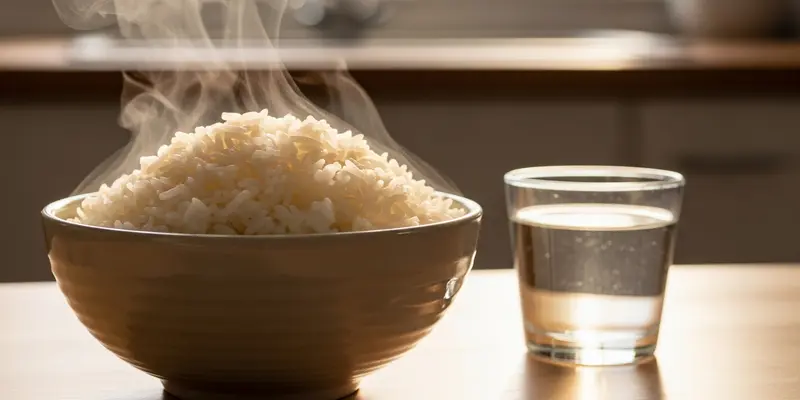
The Microwave Isn’t Your Enemy
Most people treat their microwave like a blunt instrument. You throw in a bowl of yesterday’s linguine, hit “3 minutes,” and pray. Then you wonder why you’re eating rubberized flour. The problem isn’t the radiation; it’s the dehydration.
When reheating rice or pasta, you are fighting physics. Microwaves target water molecules. If those molecules evaporate without being replaced, your dinner turns into a desert. It’s time to stop the madness and start eating food that actually tastes like food.
The Anatomy of the “Splash” Hack
It sounds too simple to work, but the science is rock solid. By adding a small amount of moisture before you hit start, you’re creating a mini-steamer inside your appliance.
- The Volume: A tablespoon per cup of food is usually plenty.
- The Distribution: Don’t just dump it in one spot. Sprinkle it like you’re seasoning the food.
- The Seal: Always cover your dish. A damp paper towel or a loose lid traps the steam where it belongs.
This isn’t just about “wetting” the food. It’s about rehydrating the starches that crystallized in the fridge. It’s the difference between garbage and gourmet.
The Night the Risotto Came Back to Life
I’ll never forget my first year out of college, living in a tiny apartment where the microwave was my primary “stove.” I had a container of leftover mushroom risotto from a rare restaurant visit. It was a cold, grey puck of disappointment.
I was starving and ready to settle for mediocrity. But I paused. I remembered watching my mother flick water onto day-old rolls before warming them. I drizzled two teaspoons of water over the rice, draped a soggy paper towel over the top, and let it spin for two minutes.
When the beep sounded, the aroma hit me first. It didn’t smell like “old” food. It smelled like fresh cream and earth. The rice was supple, the sauce was glossy again, and I realized I’d never eat dry leftovers again. That simple act of adding moisture saved my dinner—and my sanity.
Why Most People Fail
The biggest mistake? Speed. We want our food hot now. But high heat for a short time is what kills the texture.
Try lowering your power level to 70%. It takes a minute longer, but it allows the steam to penetrate the center of that pasta clump without turning the edges into jerky. Your patience will be rewarded with a meal that actually feels like it was cooked today.
Summary: Respect the Grain
Stop settling for crusty, unappealing meals. When you are reheating rice or pasta, remember the golden rule: moisture in equals moisture out. Add the water, cover the plate, and treat your leftovers with the respect they deserve. Your taste buds—and your grocery budget—will thank you.
FAQs
Q: How much water should I actually use? A: For a standard bowl of rice or pasta, one to two tablespoons is the sweet spot. You want to create steam, not a soup.
Q: Can I use an ice cube instead of water? A: Absolutely. Placing an ice cube in the center of your rice is a pro move. It melts slowly and won’t make the bottom of the bowl soggy.
Q: Does this trick work for pizza too? A: Not exactly. For pizza, place a half-full glass of water next to the plate. It keeps the crust from getting chewy while the cheese melts.
Q: Should I stir the food halfway through? A: Yes. Stirring redistributes the heat and the moisture you just added, ensuring no cold, dry spots remain in the center.
Q: Is a paper towel better than a lid? A: A damp paper towel is superior because it provides direct moisture while allowing a tiny bit of pressure to build up without exploding.
Q: Why does my rice get so hard in the fridge anyway? A: It’s called starch retrogradation. The molecules crystallize as they cool. The “splash of water” hack is essentially reversing that chemical process with heat and hydration.