
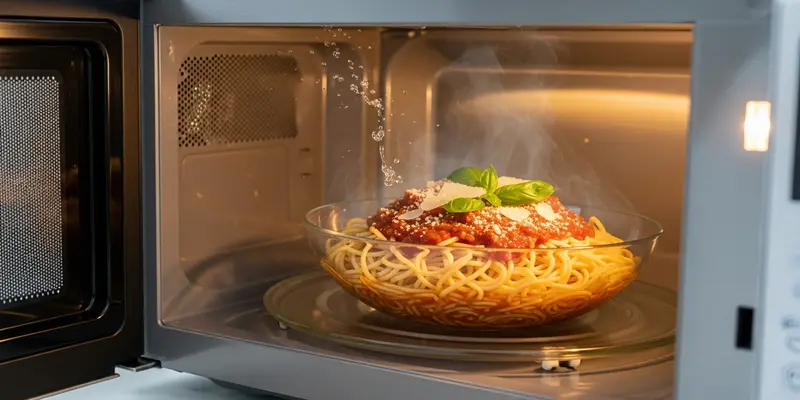
Most people treat their microwave like a magic box that simply makes things hot. They are wrong. If you are tossing yesterday’s penne into the machine without a second thought, you aren’t cooking; you’re dehydrating. The truth is, Microwave reheating is a violent process for starch, and if you don’t intervene, you’re destined to eat rubbery, flavorless shrapnel.
The Brutal Science of Starch
When pasta or rice cools down, it undergoes a process called starch retrogradation. The molecules tighten up, pushing water out and turning soft noodles into stiff, crystalline structures. This is why cold pasta feels like cardboard.
When you hit that ‘Start’ button, the microwave targets water molecules. It turns them into steam. Without an external moisture source, the microwave yanks the remaining water right out of the heart of your pasta. By the time the timer dings, your dinner has essentially been mummified.
The One-Splash Solution
To save your meal, you must create a micro-sauna. Adding a tablespoon of water—just a splash—does three critical things:
- Prevents Dehydration: It gives the microwave a sacrificial moisture source to turn into steam first.
- Softens the Starch: The steam penetrates the hardened starch crystals, making them pliable and soft again.
- Even Heating: Water helps distribute heat more evenly, preventing those annoying “molten on the outside, frozen in the middle” moments.
Don’t just pour the water on and leave it exposed. You need a lid. Whether it’s a dedicated microwave cover or just another plate flipped upside down, you must trap that steam.
A Lesson from the Penne Pebbles
I learned this the hard way during my first year living alone. I had a massive bowl of my mother’s legendary Bolognese. I was hungry, lazy, and arrogant. I threw the bowl in for three minutes on high. No water. No cover.
What came out wasn’t pasta; it was a bowl of red-stained pebbles. The noodles had fused together into a singular, impenetrable mass. I actually chipped a tooth trying to salvage a bite. That night, I ate cereal for dinner and swore never to disrespect a starch again. Now, I treat the water splash as a sacred ritual. It’s the difference between a sad desk lunch and a meal that tastes like it was just pulled off the stove.
Why Quality Matters
Using filtered water or even a splash of chicken broth can elevate the flavor even further. If you’re reheating something creamy, like Fettuccine Alfredo, a splash of milk works even better than water to reconstitute the fats in the sauce.
Stop settling for mediocre leftovers. You spent time cooking that meal (or money buying it). Take five seconds to add some moisture. Your palate—and your dental work—will thank you.
FAQs
Q: How much water should I actually use?
A: For a single serving, one to two teaspoons is plenty. You want enough to create steam, not turn your plate into a soup.
Q: Does this work for rice as well?
A: Absolutely. Rice is even more prone to drying out than pasta. An ice cube placed in the center of the rice pile is a great alternative to liquid water.
Q: Should I stir the pasta halfway through?
A: Yes. Stirring redistributes the moisture and ensures the steam hits every noodle, preventing those dry, crunchy edges.
Q: Can I use olive oil instead of water?
A: Oil helps with texture, but it doesn’t create the steam necessary to rehydrate the starch. Use water or broth for the best results.
Q: Is it safe to microwave plastic wrap as a cover?
A: It’s better to use a ceramic plate or a glass lid. Some plastics can leach chemicals when they come into contact with steam and high heat.
Q: Why does my pasta still get mushy sometimes?
A: You’re likely adding too much water or microwaving it for too long. Heat in 45-second intervals and check the texture frequently.