
Stop Cutting Cat Mats: The Painless 30-Second Secret
You see that clump of felted fur behind your cat’s ears and your first instinct is to grab the kitchen shears. Put them down. Seriously. Don’t Reach for the Scissors. If you’ve ever seen how thin a cat’s skin is—literally like wet tissue paper—you’d know that a single slip leads to a bloody trip to the emergency vet.
Matted fur isn’t just an eyesore; it’s a physical burden. Imagine wearing a rubber band that’s been twisted so tight it’s constantly pinching your skin. That is what your cat feels. Every time they jump, stretch, or groom, that mat tugs harder. But you can fix this without the trauma. Here is how we move from tangled mess to a happy, purring pet using logic and patience instead of blades.
The Philosophy of the 30-Second Micro-Session
Cats are not dogs. They don’t have the patience for an hour-long grooming marathon. If you try to tackle a massive mat in one sitting, you’re going to end up with a scratched arm and a cat that hides under the bed for three days.
- The Clock is Ticking: Keep every interaction to exactly 30 seconds.
- The Reward System: Treats should be dispensed before, during, and after.
- Walk Away: If the tail starts twitching, you’re done. Even if you only loosened three hairs, you’ve won the round.
The Periphery-to-Center Strategy
Most people try to dive straight into the heart of the knot. That’s a mistake. The heart of the mat is where the tension is highest. Instead, you need to work from the outside in.
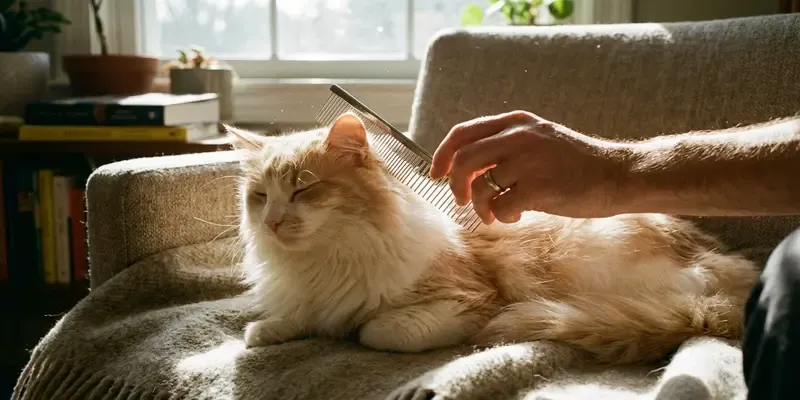
Use a wide-toothed metal comb or a dedicated de-matting tool—never a brush with plastic tips. Start at the very edges of the mat, where the hair is still somewhat loose. Gently pick at the fibers, pulling them away from the clump. By working the perimeter, you slowly shrink the “core” of the mat until it eventually collapses. This method prevents that sharp, stinging pull on the skin that causes cats to bite.
A Lesson from Jasper and the ‘Felted Marble’
I learned this the hard way with my Maine Coon, Jasper. He had developed a mat behind his hind leg that felt like a solid marble of felted wool. I was tired, he was cranky, and I tried to pull it apart with my fingers. I can still hear the sharp hiss he gave me—a sound of pure betrayal. His skin was pulled so taut into the knot that I was essentially pinching his leg.
I stopped. I breathed. I grabbed a bit of cornstarch (a great natural lubricant for fur) and began the 30-second method. I spent three days working on that one spot, just 30 seconds at a time while he ate his breakfast. On the fourth day, the marble simply fell away in my hand. No blood, no trauma, just a very soft cat who went right back to his kibble.
Tools of the Trade
Forget the fancy gadgets. You only need three things to be successful:
- A Metal Greyhound Comb: The gold standard for reaching the skin without scratching it.
- Cornstarch or Detangling Spray: This helps the hair fibers slide past each other.
- High-Value Treats: Churu, tuna, or whatever makes your cat lose their mind.
Why Professional Groomers Hate Scissors
Ask any vet or groomer about “scissor injuries.” They happen in a heartbeat. Because mats pull the skin upward into the fur, what looks like a clump of hair is often a tented fold of skin. When you snip, you aren’t just cutting hair; you’re performing unintended surgery. Using the periphery-to-center method removes the risk entirely. It’s slower, yes, but it’s humane.
Conclusion
Grooming your cat should be a bonding experience, not a battle. By respecting the 30-second rule and avoiding the temptation to “just snip it off,” you preserve your cat’s trust. You aren’t just removing a knot; you’re providing relief from constant physical tension. Take it slow, stay focused on the edges, and leave the scissors in the drawer where they belong.
FAQs
Q: Can I use human hair detangler on my cat? No. Many human products contain essential oils or chemicals that are toxic to cats when they lick their fur. Use a cat-specific spray or plain cornstarch.
Q: How do I know if a mat is too close to the skin to remove at home? If you cannot see the space between the mat and the skin, or if the skin is red and irritated, stop immediately and see a professional groomer or vet.
Q: My cat won’t let me touch him for even 5 seconds. What now? Try grooming him when he is sleepy. Many owners find success right after a meal or late at night when the cat is in a ‘cuddle’ mood.
Q: Is cornstarch really safe for cats? Yes, in small amounts. It helps absorb oils and makes the fur slippery. Just don’t let them inhale the powder; rub it into your fingers first.
Q: Why do mats keep forming in the same spot? High-friction areas—like behind the ears, under the armpits, and around the collar—are prone to matting. Regular brushing in these specific zones can prevent them from starting.
Q: Should I bathe my cat to help loosen the mats? Absolutely not. Water often acts like glue for mats, causing the hair fibers to swell and tighten further. Always de-mat a dry cat.


