
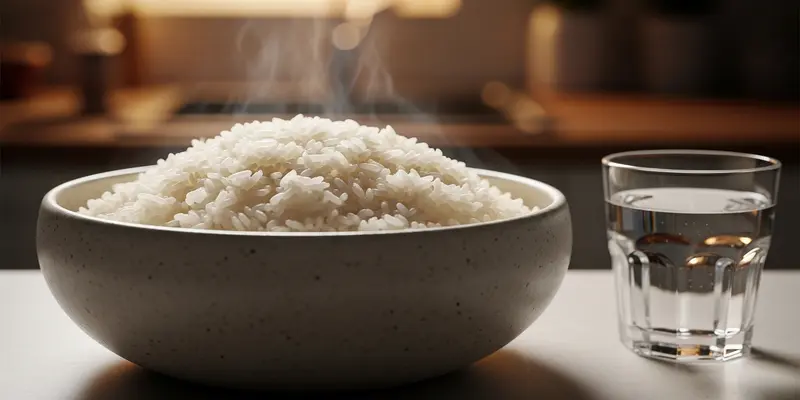
We’ve all been there. You’re starving, it’s 12:15 PM, and you pull a container of yesterday’s fried rice from the fridge. It’s a solid, monolithic block of starch. You put it in the microwave for two minutes, and what do you get? Hot pebbles. The tragedy of the dry leftover is a culinary sin we’ve accepted for too long. But here is the truth: you aren’t bad at cooking; you’re just forgetting the Splash of Water secret.
The Physics of the ‘Microwave Desert’
Microwaves work by vibrating water molecules to create heat. When you reheat rice or pasta, those grains have already lost most of their moisture to the fridge’s dry air. Without adding hydration, the microwave essentially turns your dinner into a kiln-fired brick. It’s a localized drought in a plastic container.
To fix this, you need to recreate the original cooking environment. Steam is the only way to soften retrograded starch—that’s the scientific term for when rice turns into gravel. By adding a tiny amount of moisture, you create a mini-sauna inside your bowl.
How to Master the Splash
Don’t just drown your food. This isn’t soup. You want to hydrate the environment, not boil the meal. Use these rules for a perfect revival:
- The Teaspoon Rule: For a single serving of rice, one to two teaspoons of water is plenty.
- The ‘Ice Cube’ Trick: Alternatively, place an ice cube in the center of the rice. It won’t melt entirely, but it provides a steady release of steam during the cycle.
- The Sealed Vault: Use a microwave-safe lid or a damp paper towel. If the steam escapes, the secret is wasted.
The Night I Saved My Carbonara
I remember a rainy Tuesday when the only thing between me and a total breakdown was a leftover bowl of spaghetti carbonara. When I pulled it out, it looked like a tangled bird’s nest of yellow wire. Most people would say "toss it." I refused. I was too tired to cook and too hungry to quit.
I drizzled exactly two teaspoons of water over the top, draped a soaking wet paper towel over the bowl like a shroud, and hit ‘Power Level 7.’ Three minutes later, the starch had relaxed. The sauce, which had looked like congealed glue, was glossy and silken again. The smell of pepper and pecorino filled my kitchen. I ate it standing over the sink, and for a moment, the world felt right. It wasn’t ’leftover’ food; it was a meal.
Stop Accepting Mediocrity
Food waste is a tragedy, but eating bad food is a personal insult. We have the technology and the knowledge to make leftovers taste 90% as good as Day One. If you’re skipping the water, you’re choosing to suffer. It takes five seconds to add that splash.
Next time you reach for that Tupperware, remember: steam is life. Take thirty seconds to hydrate your grains. Your palate—and your trash can—will thank you. Stop punishing yourself with dry rice.
FAQs
Q: Will the water make my rice soggy?
No, as long as you don’t overdo it. The goal is steam, not a bath. One teaspoon is usually enough to hydrate the air around the grains without turning them into mush.
Q: Should I stir the food halfway through?
Absolutely. Microwaves have notoriously uneven heat distribution. Stirring redistributes the newly created moisture and ensures every grain gets a turn in the steam.
Q: Can I use this for pasta with red sauce?
Yes! Tomato sauce actually benefits significantly from a splash of water, as it prevents the sauce from separating and becoming unpleasantly oily.
Q: Is a damp paper towel better than a lid?
A damp paper towel is the ‘gold standard’ because it acts as its own moisture source while allowing just enough pressure to build up without exploding.
Q: Why does my rice get so hard in the fridge anyway?
It’s called starch retrogradation. The molecules realign into a crystalline structure as they cool. Heat and water together are the only things that can break those crystals back down into something edible.
Q: Can I use chicken broth instead of water?
Now you’re thinking like a pro. Using broth or even a dash of soy sauce adds a layer of seasoning while providing the necessary steam to fix the texture."