
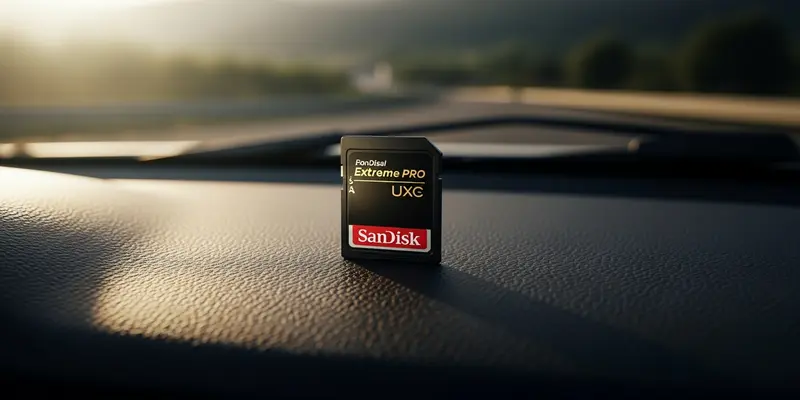
You’re driving home when a fender bender happens. You aren’t worried; you have a dashcam. But when you pull the footage, you see the dreaded message: "File Corrupted." This isn’t bad luck. It’s a choice. If you are using a standard SD card in your dashcam, you are effectively driving without a camera at all. You’ve fallen victim to dashcam memory card failure, and it’s time to stop gambling with your insurance claims.
The Meat Grinder: Why Dashcams Kill SD Cards
Most people think an SD card is a static bucket where data sits. It’s not. In a dashcam, it’s more like a treadmill running at 100 mph. Standard cards are designed for occasional use—taking a few photos on a weekend trip.
Dashcams perform "loop recording." They constantly overwrite old data, 24/7. This creates massive heat and electrical stress. A standard card has a limited number of "write cycles" before the flash cells literally wear out. When you use a cheap card, you aren’t just buying storage; you’re buying a ticking time bomb.
Speed Classes are a Marketing Trap
Don’t let that "Class 10" or "V30" sticker fool you. Speed tells you how fast the card can write, not how long it will live. You can have the fastest card in the world, but if it isn’t rated for high endurance, the constant heat of a parked car in July will fry its controller in months.
- Standard Cards: Use TLC (Triple-Level Cell) flash. It’s cheap but fragile.
- High-Endurance Cards: Often use pSLC or MLC technology, designed to be hammered with data for 20,000+ hours.
The Day My Evidence Vanished
I learned this the hard way on a rainy Tuesday in Seattle. A delivery truck merged into my lane, clipping my mirror and denting the door. I had a top-of-the-line 4K dashcam. I felt invincible.
When I got home and plugged the card into my PC, the latest file was from three weeks ago. The card had quietly reached its write limit and entered "Read Only" mode without the camera ever notifying me. That $15 savings on a budget SD card cost me a $1,200 deductible. I felt like an amateur. I could feel the cold realization in my chest—I had the footage until I actually needed it.
How to Tell if Your Card is Dying
You don’t have to wait for a crash to find out your card is toast. Watch for these red flags:
- Slow Startup: If your camera takes longer than usual to begin recording.
- Missing Minutes: Gaps in your video timeline where the camera simply didn’t record.
- Beeping: Most modern dashcams will emit a specific error beep when they can’t write to the card.
- Warmth: If the card feels excessively hot to the touch immediately after a drive.
The Solution: Invest in High-Endurance
Stop treating your memory card as a commodity. It is the most critical component of your security system. Look for cards specifically labeled "High Endurance." Brands like SanDisk (Max Endurance line) or Samsung (Pro Endurance) are the gold standard here. They are built to handle the thermal throttling and the relentless cycle of a dashcam.
Format your card inside the camera once a month. This clears out file system errors and keeps the controller healthy. It takes ten seconds, but it saves hours of headache later.
FAQs
1. Can’t I just use a regular 256GB card?
No. Higher capacity helps because it takes longer to finish a "loop," but the underlying flash memory is still not built for the heat and constant voltage of a dashcam. High endurance is a build quality, not a size.
2. How long does a High-Endurance card last?
Typically, a good one will last 2 to 5 years depending on your driving habits and the resolution of your camera (4K eats cards faster than 1080p).
3. Does my camera tell me if the card fails?
Not always. Many cheap dashcams will show a green light even if the card is corrupted. Manually checking your footage once a month is the only way to be 100% sure.
4. Are these cards more expensive?
Yes, usually by $10 to $20. Considering a dashcam is insurance against a multi-thousand dollar accident, it is the cheapest insurance you will ever buy.
5. Why does heat affect the SD card?
SD cards are plastic and silicon. In a car, temperatures can exceed 140°F. High-endurance cards use industrial-grade controllers that don’t warp or fail under high thermal loads.
6. Can I recover footage from a dead card?
Rarely. Once the flash cells are worn out (burnt), the data is physically gone. Prevention is your only real option here.