
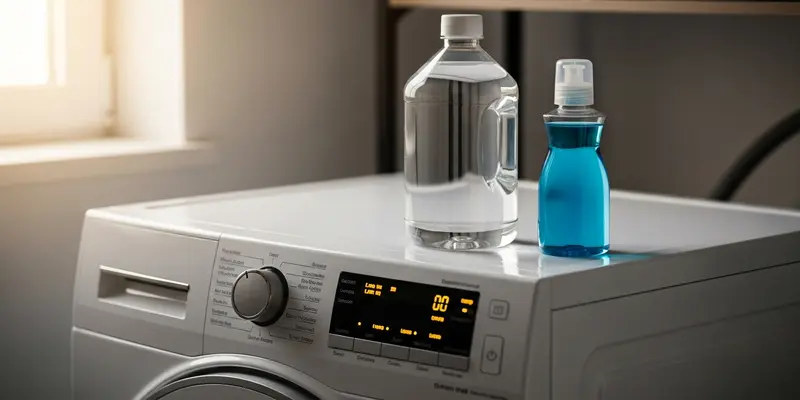
You loaded the machine at 8 AM. It’s now 6 PM, and the display still mocks you with a stubborn "30 minutes remaining." You open the door, and instead of fluffy towels, you’re greeted by a wall of humid steam and fabric that feels like it was pulled from a swamp. This is the reality for many homeowners dealing with the question: Why Your All-in-One Washer Dryer Takes Forever to Dry?
Modern appliances are over-engineered. They rely on delicate sensors that are easily confused by the very things they are meant to clean. If your machine has turned into a 10-hour energy vampire, it’s not broken—it’s just blinded by its own filth. Here is how you fix it without calling a technician.
The Lie of the "Smart" Sensor
Most all-in-one units use moisture sensors to determine when your clothes are done. These sensors are usually small metal plates located near the drum or lint filter. Over time, they get coated.
- Mineral Scale: Hard water leaves a microscopic film.
- Fabric Softener Residue: That "fresh scent" is actually a waxy coating that traps lint.
- Lint Sludge: Fine particles mix with moisture to create a barrier.
When these sensors are coated, they can’t detect the electrical conductivity of the moisture in your clothes. The machine assumes the load is still soaking wet and keeps the heater running indefinitely. You aren’t just wasting time; you’re roasting your clothes and your electricity bill.
The Nuclear Option: Vinegar and Rinse Aid
You don’t need a toolbox for this; you need your pantry. The combination of white vinegar and dishwasher rinse aid is a miracle worker for descaling and degreasing internal components.
- Clear the Drum: Make sure the machine is completely empty.
- The Mix: Pour two cups of white vinegar directly into the drum and fill the rinse aid compartment to the max.
- The Heat: Select the hottest maintenance or "Tub Clean" cycle your machine offers.
- The Rinse: Once finished, run one additional quick rinse cycle with plain water to clear any lingering acidity.
The vinegar dissolves the calcium buildup on the sensors, while the surfactants in the rinse aid break down the oily wax from fabric softeners. It’s a chemical reset that clears the machine’s "eyes."
A Midnight Realization by the Laundry Pile
I remember standing in my laundry room at 1:00 AM, staring at a mountain of damp school uniforms. My high-end European combo unit had been running for nine hours. I was exhausted, furious, and ready to list the machine on Facebook Marketplace for $50 just to be rid of it. The air smelled like hot, wet dust—a scent I’ve come to associate with appliance failure.
Out of pure desperation, I tried this vinegar trick I’d seen on an old plumbing forum. I didn’t think it would work. But the next morning, I threw in a load of heavy towels, and they were bone-dry in less than three hours. It wasn’t a mechanical failure; it was a sensory one. My machine was just screaming for a deep clean I didn’t know it needed.
Maintenance is Not Optional
If you want to keep your drying times under control, you have to be proactive. These machines are not "set it and forget it."
- Monthly Flushes: Run the vinegar cycle once a month, regardless of how it’s performing.
- Ditch the Sheets: Stop using dryer sheets. They are essentially wax paper that coats everything in a waterproof film.
- Check the Filter: All-in-ones often have a secondary pump filter at the bottom. Clean it every two weeks or prepare for the 10-hour cycle to return.
FAQs
Does vinegar damage the rubber seals?
In small amounts and during a diluted cycle, no. White vinegar is a mild acid. Using it once a month is perfectly safe for high-quality EPDM rubber seals found in modern washers.
Why use dishwasher rinse aid in a clothes washer?
Rinse aid is designed to break the surface tension of water and prevent spotting. In a washer-dryer, it helps strip away the waxy buildup from detergents and softeners that vinegar alone might miss.
My machine doesn’t have a ‘Tub Clean’ cycle. What do I use?
Use the "Whites" or "Sanitize" cycle. You want the highest temperature setting possible (usually 60°C or 90°C) to ensure the minerals dissolve effectively.
Will this fix a broken heating element?
No. If your clothes come out cold and wet after hours of running, your heating element or thermal fuse is likely dead. This hack is specifically for machines that get hot but won’t stop running.
Can I use apple cider vinegar instead?
Stick to white distilled vinegar. Apple cider vinegar contains sugars and sediment that can leave a residue, which is exactly what we are trying to remove.
How do I know if the sensors are the problem?
If the timer stays stuck at a certain minute (like "0:01" or "0:15") for an hour or more, or if the drying time drastically increases for small loads, your sensors are almost certainly dirty.