
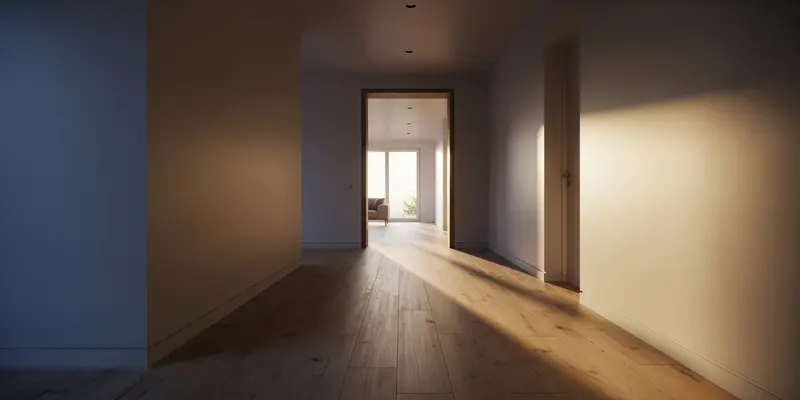
You’re standing in the middle of the kitchen. The fridge hums. A fly buzzes against the window. And you? You have absolutely no idea why you’re there. You’ve just fallen victim to the Doorway Effect. It’s not early-onset dementia, and you aren’t losing your mind. It’s a cognitive glitch that proves your brain is a ruthless, high-speed editor.
Your Brain is a Resource Hog
Modern psychology calls this phenomenon “boundary salience.” Here is the blunt reality: your brain is obsessed with efficiency. It treats a doorway like a “save and close” command on a computer file.
When you move from the living room to the kitchen, your brain archives the “living room” data to make space for “kitchen” data. It assumes that whatever you were thinking about in the lounge is no longer relevant. It’s a survival mechanism from our ancestors, but in a modern house, it just makes us look like confused ghosts haunting our own hallways.
The Power of the Physical Anchor
Memory isn’t just a cloud storage system; it’s tethered to your physical environment. We think in contexts. When you break that context by passing through a frame, the thread snaps.
- Environment matters: Your surroundings act as a scaffolding for your thoughts.
- Event boundaries: Doorways signal a change in the “episode” of your life.
- The Reset: Walking through a door tells the brain, “New scene, clear the stage.”
The Living Room Rescue
I remember a Tuesday last month. I was on my sun-drenched patio, nursing a cold brew, when I realized I needed my charger. I stood up, marched through the sliding glass door into the dim, cool hallway, and—poof.
The thought evaporated. I stood there, smelling the faint scent of pine cleaner and old mail, feeling like a glitching NPC in a video game. I didn’t try to force it. I knew better. I turned around, walked back onto the patio, and sat in the exact same wicker chair. The second my skin hit the cushion, the image of the white USB cable on the nightstand flickered back into existence. My brain needed the patio to find the file.
Don’t Fight the Glitch, Use It
Stop standing in the new room looking at the ceiling. You won’t find the answer there. The most effective solution is the most literal one: backtrack.
Physically returning to the spot where the thought was born re-engages the sensory cues that triggered it. It’s a humble admission that we are biological creatures, not digital processors. Embrace the walk back. It’s not a waste of time; it’s a manual reboot for your working memory.
FAQs
What exactly is the Doorway Effect?
It is a psychological phenomenon where passing through a doorway or physical boundary causes a person to forget their immediate intentions or thoughts.
Why does moving to a new room cause memory loss?
Your brain perceives the doorway as an “event boundary.” It clears out the short-term memory of the previous room to prepare for the new environment.
Does this happen more as you get older?
While memory can change with age, the Doorway Effect is a fundamental part of how human cognition works and affects people of all ages.
Can this happen in digital environments too?
Yes. Research suggests that switching between browser tabs or different software windows can trigger a similar cognitive reset.
Is there a way to prevent it without walking back?
Some find success by vocalizing their goal. Saying “I am going to get my keys” out loud while walking can help keep the thought active.
Does returning to the original room always work?
Usually, yes. Returning to the original context reintroduces the visual and sensory cues that were present when the thought was first formed.