
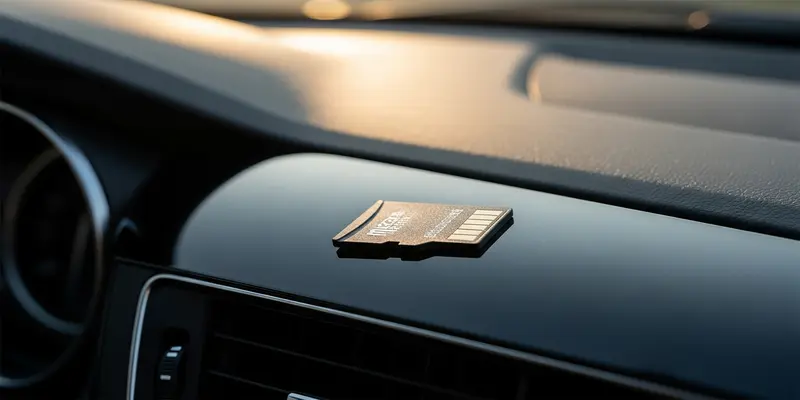
You’re driving home when a distracted driver clips your front fender and speeds off. You aren’t worried; you have a 4K dashcam. But when you pull the footage later, you’re met with a chilling message: “File Corrupted.” This isn’t a glitch. It’s the inevitable result of using a standard SD card in a device that never stops writing. Standard SD cards are the silent killers of critical evidence, and if you haven’t switched to high endurance memory, you are playing a dangerous game with your own insurance claim.
The Myth of the “Class 10” Label
Most people see “Class 10” or “U3” on a card and assume it’s fast enough for their dashcam. Speed isn’t the problem. Longevity is. A standard SD card is designed for a photographer who takes a few hundred shots and then puts the card in a drawer.
Dashcams are different. They are hungry, relentless data-writing machines. They record, overwrite, and repeat—thousands of times. This constant cycle of electrical stress wears out the flash memory cells. When you use a consumer-grade card, you aren’t just using it; you are burning it alive from the inside out.
Why Standard Cards Give Up the Ghost
Traditional cards use technology designed for density and cost, not durability.
- Write Cycles: Standard cards have low P/E (Program/Erase) cycles. They simply aren’t built for 24/7 loops.
- Heat Sensitivity: Car interiors become ovens. Standard cards warp and fail under the extreme thermal stress of a parked car in July.
- Controller Failure: Cheap cards have basic controllers that can’t handle the error correction needed for constant video streams.
When these cards fail, they don’t give you a warning light. They just stop saving data, or worse, they save “ghost files” that look real but contain nothing but digital static.
A $1,200 Lesson in Cheap Memory
I learned this the hard way three years ago. I was parked in a rainy lot in Seattle when a delivery truck crunched my side mirror and vanished. I felt smug. I had a top-tier camera. I grabbed the card—a cheap 128GB card I’d picked up on sale—and plugged it into my laptop.
The folder was there. The filenames were there. But the files were empty. The card had reached its write limit months prior, and instead of telling me, it just kept “recording” into a black hole. I ended up paying a $1,200 deductible out of pocket because I tried to save $15 on a memory card. The smell of wet pavement and the sight of that “File Not Found” error is a memory I’d rather not repeat.
The High Endurance Solution
High Endurance cards are built differently. They use specialized NAND flash and sophisticated controllers designed specifically for surveillance.
- Longevity: These cards are rated for thousands of hours of continuous recording.
- Environmental Protection: They are typically waterproof, shockproof, and—most importantly—temperature proof.
- Warranty: Most manufacturers will actually honor the warranty if the card is used in a dashcam, whereas standard cards often have their warranties voided the moment they’re inserted into a recording device.
Stop Gambling with Your Safety
If you are still using that generic card that came in a bundle, throw it away. Or better yet, put it in your digital camera where it belongs. Buy a dedicated High Endurance card from a reputable brand. It’s a small price to pay for the peace of mind that when the unthinkable happens, your camera will actually have your back.
FAQs
How long does a standard SD card last in a dashcam?
Usually between six months to a year, depending on how much you drive. However, they can fail in as little as three months under heavy use or high heat.
What does “High Endurance” actually mean?
It refers to the card’s ability to withstand frequent write and erase cycles. These cards use higher-quality flash memory that can handle the constant stress of loop recording.
Can I just use a larger standard card instead?
No. While a larger card has more cells to wear down, the underlying technology is still not designed for the heat and constant data flow of a dashcam.
Do dashcams require a specific speed class?
Yes, most modern 4K dashcams require at least a U3 or V30 rating to ensure the data is written fast enough to prevent buffering errors.
Why do some cards stop working when it’s hot outside?
Heat increases electrical resistance and can cause the plastic casing to expand. High endurance cards are tested to operate in temperatures ranging from -25°C to 85°C.
How often should I format my dashcam SD card?
Even with a high endurance card, you should format it every 2-4 weeks. This clears out corrupted file fragments and keeps the file system healthy.