
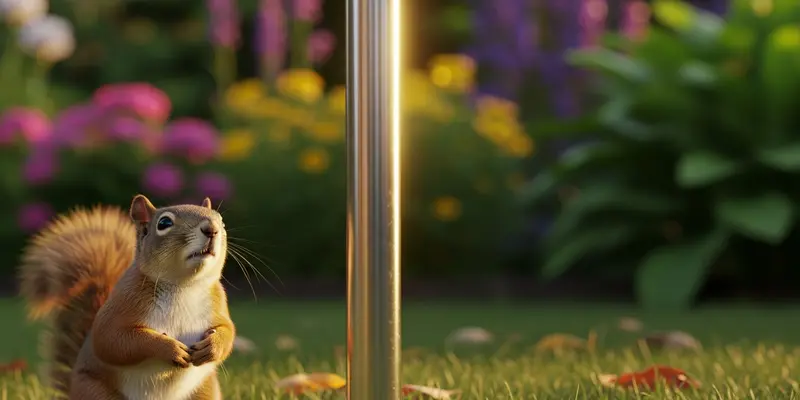
Imagine you’ve just poured a fresh bag of expensive sunflower seeds into your new feeder. You sit back with a cup of coffee, expecting a show of cardinals and chickadees. Instead, you get a furry acrobat doing a pull-up on the perch, gorging itself while the birds watch from the fence. It’s maddening. Most people reach for the credit card to buy another ‘guaranteed’ baffle, but the real solution is likely sitting in your kitchen pantry: Non-Stick Cooking Spray.
Why Mechanical Guards Are a Waste of Cash
Squirrels are the structural engineers of the rodent world. They don’t see a ‘squirrel-proof’ cage as a barrier; they see it as a puzzle. Most commercial devices rely on springs, weight-sensitive perches, or plastic domes. These things break. They rust. Or, more often than not, the squirrel simply finds a way to hang from a nearby branch and bypass the mechanism entirely.
We need to stop trying to out-think them and start out-slicking them. Friction is the squirrel’s only path to victory. If you remove the friction, you remove the squirrel.
The Science of the Slide
Metal poles are the standard for bird feeders, but they offer just enough texture for a squirrel’s claws to find purchase. A light coating of food-safe lubricant changes the physics of the climb. To a squirrel, a treated pole feels like trying to run up a vertical ice rink. It’s harmless, highly effective, and deeply satisfying to watch from your window.
- Clean first: Wipe the pole to remove grit.
- Apply thin coats: You don’t need it dripping; just a shimmering film.
- Focus on the middle: Spray the section between 3 and 6 feet up.
The Legend of Brutus
Last July, I was locked in a psychological war with a particularly portly squirrel I named Brutus. Brutus had figured out how to leap from my porch railing, catch the edge of a ‘guaranteed’ baffle, and swing himself upward like a gymnast. He was eating $20 of seed a week.
I finally grabbed a can of generic canola spray. I coated the pole until it gleamed in the afternoon sun. Ten minutes later, Brutus made his move. He took his usual flying leap, hit the pole with total confidence, and immediately slid down like a cartoon character. He landed in a heap of confusion on the grass, looked up at the feeder, and tried again. Same result. He hasn’t touched the feeder since, and my backyard is finally a bird sanctuary again.
Why Food-Safe is Non-Negotiable
I’ve heard ‘old-timers’ suggest using WD-40 or axle grease. That is a terrible idea. Industrial lubricants are toxic and can destroy the waterproofing on a bird’s feathers if they accidentally touch the pole. Always use a vegetable-based Non-Stick Cooking Spray. It’s biodegradable, safe for paws, and won’t harm the environment. We want to frustrate the squirrels, not poison the ecosystem.
Reclaiming Your Backyard
You don’t need a bigger budget to win the war against garden pests. You just need to be a little more creative. Ditch the high-priced plastic gadgets and reach for the kitchen spray. It’s the cheapest, most effective defense system you’ll ever own.
FAQs
Q: Is non-stick spray safe for the birds? Yes, provided you use a vegetable-based food spray. Avoid any petroleum products or chemical lubricants.
Q: How often do I need to reapply the spray? Usually once a week or after a heavy rainstorm. If you see a squirrel getting a grip, it’s time for a fresh coat.
Q: Will the oil attract ants? No. The layer is too thin to serve as a food source, and the slippery surface actually makes it harder for ants to climb.
Q: Does it work on wooden posts? It’s less effective on wood because the oil soaks into the grain. It works best on smooth surfaces like metal or PVC.
Q: Which brand works best? Any generic store-brand canola or vegetable oil spray works perfectly. Don’t waste money on name brands.
Q: Will it hurt the squirrel’s fur? Not at all. It’s the same oil found in many of the seeds they eat. It just makes them a little shinier for a day.