
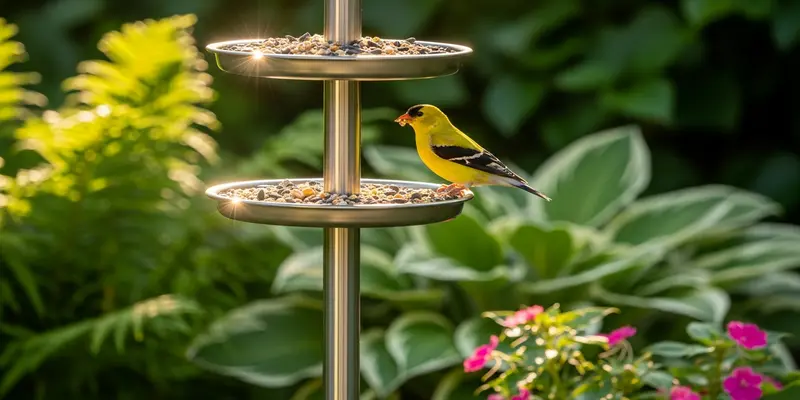
You’ve spent forty dollars on premium sunflower seeds and suet cakes. Within ten minutes, a furry gymnast has bypassed your expensive “squirrel-proof” cage and is vacuuming up the loot. It’s a recurring nightmare for bird lovers, and quite frankly, it’s a waste of money. Most people think they need high-tech baffles or electrified perches to deal with squirrels on bird feeder poles. They’re wrong.
The industry wants you to believe that the only solution involves spending fifty bucks on plastic domes that eventually crack under the sun. I’m here to tell you that the most effective deterrent in your arsenal is sitting right next to your frying pan. Non-stick cooking spray is the ultimate equalizer in the war for the birdseed.
Why Most Squirrel Deterrents Fail
Squirrels are basically tiny, fuzzy ninjas with a PhD in physics. They can jump five feet vertically and ten feet horizontally. They have claws that can grip almost any textured surface. Most “squirrel-proof” feeders rely on weight-sensitive perches, but squirrels are clever enough to hang from the top or shake the feeder until the seeds fall out.
The real vulnerability isn’t the feeder; it’s the pole. If they can’t climb, they can’t eat.
The Physics of the Slip-and-Slide
When you apply a thin layer of non-stick cooking spray to a metal support pole, you are removing the one thing the squirrel needs most: friction. Without friction, those sharp claws have nothing to bite into.
- It’s Cost-Effective: A generic can costs less than three dollars.
- It’s Non-Toxic: Unlike axle grease or petroleum jelly (which can mat a squirrel’s fur and cause them to freeze in winter), cooking spray is food-grade and safe.
- It’s Invisible: You don’t have to ruin your garden’s aesthetic with ugly plastic hardware.
A Sunday Morning Comedy Show
I’ll never forget the first time I tried this. I was sitting on my back porch last July, clutching a mug of lukewarm coffee and feeling defeated. A particularly chunky grey squirrel—I called him Barnaby—had made it his life’s mission to empty my finch feeder every morning.
I walked out, gave the copper pole a heavy coating of generic canola spray, and waited. Five minutes later, Barnaby appeared. He took his usual running start, leaped toward the pole, and hit it about three feet up. Instead of his usual upward scramble, he slowly, gracefully slid back down to the grass like a firefighter on a pole. He looked at the metal with genuine betrayal, tried once more with more speed, and ended up doing a slow-motion slide directly into the dirt. He hasn’t been back since.
How to Apply It Correctly
Don’t just spray haphazardly. To make this work, you need a strategy.
- Clean the Pole: Wipe off any existing gunk or dirt so the spray adheres to the metal.
- Target the Middle: Focus your spray on the section between 2 feet and 5 feet off the ground.
- Reapply Regularly: Depending on the weather, you’ll need to re-up the coating every week or after a heavy rainstorm.
- Use a Shield: Hold a piece of cardboard behind the pole while spraying to keep the oil off your grass or nearby plants.
The Moral of the Story
Nature is persistent, but you can be smarter. Stop buying into the hype of expensive garden gadgets. The birds deserve their meal, and you deserve the satisfaction of winning the battle without breaking the bank. Go to your pantry, grab that can of Pam, and take your bird feeder back.
FAQs
Q: Will cooking spray hurt the birds? A: No. As long as you apply it to the pole and not the feeder itself, the birds won’t even touch it. It’s a non-toxic vegetable-based oil.
Q: How often do I need to reapply the spray? A: Usually once a week or after a heavy downpour. If you see a squirrel successfully making it halfway up, it’s time for a fresh coat.
Q: Does it work on wooden posts? A: It is less effective on wood because the oil soaks in. It works best on smooth metal or PVC poles.
Q: Can I use butter or lard instead? A: You could, but cooking spray is much easier to apply evenly and doesn’t get as messy in the heat.
Q: Will the oil attract ants? A: Generally, no. Most cooking sprays are flavorless and don’t contain the sugars that attract ants or other pests.
Q: Is there a specific brand that works best? A: Any generic non-stick spray will do. The cheaper, the better—the goal is the oily residue, not the brand name.