
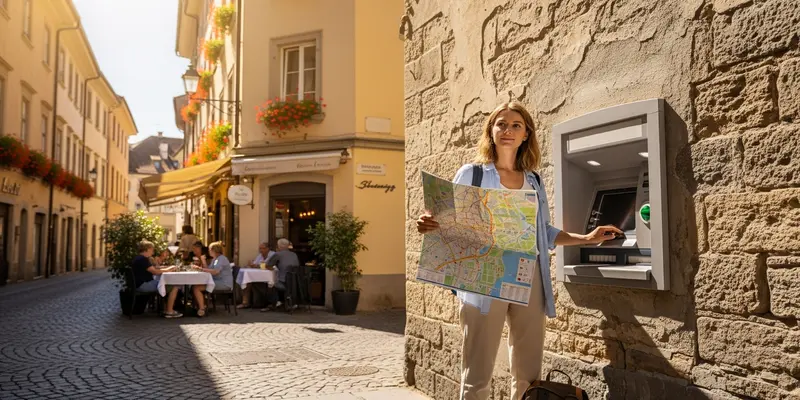
You’re in a foreign city. The sun is setting. You need cash for that "cash only" bistro tucked away in a side street. You find an ATM, slide your card in, and the screen flickers. It asks a seemingly polite question: "Would you like us to handle the conversion for you?" It sounds helpful. It sounds safe. It is a total trap. The ATM ‘Conversion’ Scam is the most common way travelers bleed money without ever seeing a pickpocket.
The Legal Heist Called DCC
Dynamic Currency Conversion (DCC) is a fancy name for a bad deal. When the machine offers to charge your card in your home currency (USD, EUR, GBP), it isn’t doing you a favor. It’s seizing the right to set its own exchange rate. And guess what? That rate is designed to maximize their profit, not your budget.
- The ATM markup can be as high as 12-18% above the market rate.
- Your home bank usually charges 0-3% for the same service.
- Choosing "With Conversion" is paying a massive tax for the psychological comfort of seeing a familiar number.
The ‘Decline’ Button is Your Best Friend
The golden rule is simple: Always choose the local currency. If you are in Tokyo, choose Yen. If you are in Paris, choose Euros. If you are in Mexico City, choose Pesos.
When you decline the conversion, the ATM sends a request to your bank in the local currency. Your bank then converts it at the interbank rate (or close to it). It’s cleaner, fairer, and keeps your hard-earned money in your pocket where it belongs. The machine might show a scary warning about "uncertain exchange rates," but ignore the noise. Your bank will almost always win that fight for you.
A Costly Lesson in Lisbon
I remember standing in a tiled alleyway in Lisbon a few years back. I was starving and eyeing a tray of warm, cinnamon-dusted Pastéis de Nata. The ATM screen gave me two options: $115 USD or 100 EUR. I was tired, the line behind me was growing, and I thought, "What’s five dollars anyway?" I hit "Accept Conversion."
Later that night, I did the math. That withdrawal actually cost me $16 more than the market rate. I had essentially handed over the price of four extra pastries and a decent bottle of Portuguese wine to a billion-dollar bank for absolutely nothing. I felt like a mark. That was the last time I ever let a machine do the thinking for me.
Take Control of Your Travel Tech
Don’t just rely on the decline button; build a better financial arsenal. Knowledge is power, but the right card is a shield.
- Get a Travel-Friendly Card: Use cards from providers like Charles Schwab or Fidelity that refund all ATM fees globally.
- Digital Banks: Use Wise or Revolut to hold local currency balances and see real-time rates.
- Always Carry a Backup: Machines fail, and some banks block foreign transactions unexpectedly.
Conclusion: Reclaim Your Freedom
Travel is about the expansion of the soul, not the subsidizing of bank executive bonuses. By hitting "Decline," you aren’t being difficult; you’re being a savvy global citizen. Don’t let the predatory convenience of the ATM ‘Conversion’ Scam ruin your trip budget. Stay sharp, hit the right button, and spend that saved cash on a sunset drink instead. You earned it.
FAQs
1. What exactly is Dynamic Currency Conversion (DCC)? It is a process where a foreign ATM or merchant offers to convert a transaction into your home currency on the spot, usually at an inflated exchange rate.
2. Is it illegal for ATMs to do this? No, it is perfectly legal. As long as the ATM displays the rate and asks for your consent, they are allowed to charge whatever markup they want.
3. Which button should I press if the ATM is confusing? Always look for the option that says "Decline Conversion," "Proceed in Local Currency," or "No, my bank will handle the rate."
4. What if the ATM says the rate is ‘Guaranteed’? "Guaranteed" just means you know exactly how much they are overcharging you. It doesn’t mean it’s a good rate. Your bank’s ‘variable’ rate will still be cheaper.
5. Do all ATMs have these high fees? Mostly third-party, non-bank ATMs (like Euronet) are the worst offenders. Major local bank ATMs are usually better but many still attempt the DCC trick.
6. Should I use a credit card for ATM withdrawals? Ideally, no. Credit cards often charge "cash advance" fees and high interest from the moment you take the cash. Use a dedicated travel debit card instead.