
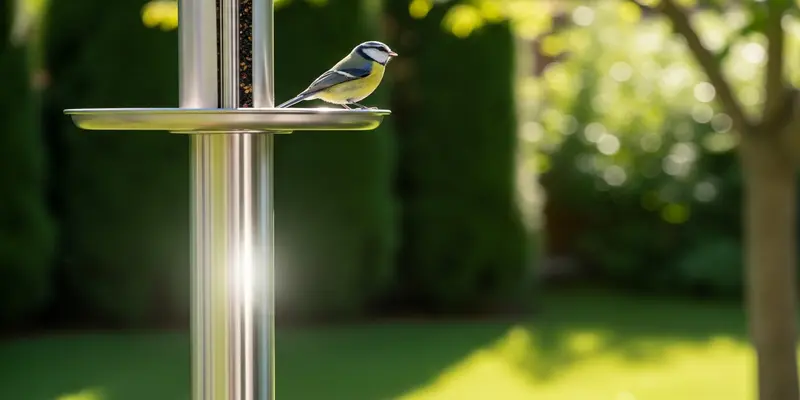
You are sitting by the window, coffee in hand, waiting for that bright red cardinal to visit your new feeder. Suddenly, a gray blur streaks across the lawn. In three seconds, a chunky squirrel has scaled the pole, scattered the expensive sunflower seeds, and sent the birds fluttering away in a panic. You’ve spent forty dollars on “guaranteed” baffles that don’t work. It is time for the $5 Squirrel-Proofing Hack Using Pantry Staples. This isn’t just another DIY project; it’s a victory for bird lovers everywhere.
Why Traditional Baffles are a Waste of Money
Most commercial squirrel baffles are overpriced plastic junk. They crack in the sun, wobble in the wind, and eventually, a determined squirrel learns to leap over them. We are conditioned to think that solving a garden problem requires a trip to a big-box hardware store and a drained bank account.
I’m here to tell you that the solution is already sitting in your kitchen cabinet. You don’t need heavy machinery or complex engineering. You need friction—or rather, the total lack of it.
The Power of Non-Stick Cooking Spray
Nature’s little gymnasts rely on one thing to get up that pole: grip. Their claws are designed to find purchase on bark and textured metal. By applying a thick, even layer of non-stick cooking spray (like Pam or a generic store brand) to the feeder pole, you turn their highway into a vertical slip-and-slide.
- Cost-Effective: A single can costs less than five bucks and lasts for months.
- Animal-Safe: Unlike grease or motor oil, vegetable-based sprays are non-toxic to animals and birds.
- Invisible: It doesn’t ruin the aesthetic of your garden with bulky plastic domes.
The Day I Won the War
I remember a humid Tuesday last August. I had just watched a particularly smug squirrel I nicknamed ‘Barnaby’ bypass my expensive metal cage for the tenth time. I grabbed a can of generic canola oil spray from the pantry and coated the iron pole from the midpoint down to the grass.
Ten minutes later, Barnaby returned. He took his usual flying leap, hitting the pole with full confidence. But instead of climbing, he slowly, almost majestically, slid straight back down to the mulch. The look of pure confusion on his face was worth every penny. He tried three more times, his little paws frantically churning against the slick metal, before he finally gave up and settled for the crumbs on the ground. For the first time in years, the birds ate in peace.
Maintenance: The Only Catch
This isn’t a “set it and forget it” solution. Because the spray is vegetable-based and thin, it will eventually wear off. To keep your bird sanctuary secure, you must reapply the spray after every heavy rain or once a week during dry spells. It takes exactly thirty seconds. If you can spray a muffin tin, you can protect your birdseed.
Reclaiming Your Garden
Stop letting rodents dictate who gets to eat in your backyard. Gardening should be a source of peace, not a constant battle against furry invaders. Grab that can of spray, head outside, and take a stand for your feathered friends. It’s cheap, it’s humane, and it works.
FAQs
Q: Is cooking spray safe for the birds’ feathers?
A: Yes. Since the spray is on the pole and not the food, birds rarely come into contact with it. Even if they do, vegetable oil is non-toxic.
Q: Can I use WD-40 instead?
A: Absolutely not. WD-40 and motor lubricants contain petroleum distillates that are harmful to wildlife and the environment. Stick to food-grade oils.
Q: Does it matter what kind of oil I use?
A: Not really. Canola, olive, or vegetable oil sprays all work. However, cheaper generic sprays often have a higher silicone or lecithin content which stays slippery longer.
Q: Will the spray attract ants to the pole?
A: Generally, no. Most ants are looking for sugar, not fat. If you notice an issue, a quick wipe with soapy water before re-spraying will clear them out.
Q: How high up the pole should I spray?
A: Spray from the ground up to about four feet. Squirrels can jump high, but they need that middle section of the pole to maintain their momentum.
Q: Does this work on wooden poles?
A: It is less effective on wood because the oil soaks into the grain. It works best on smooth metal or PVC poles where the oil can sit on the surface.