
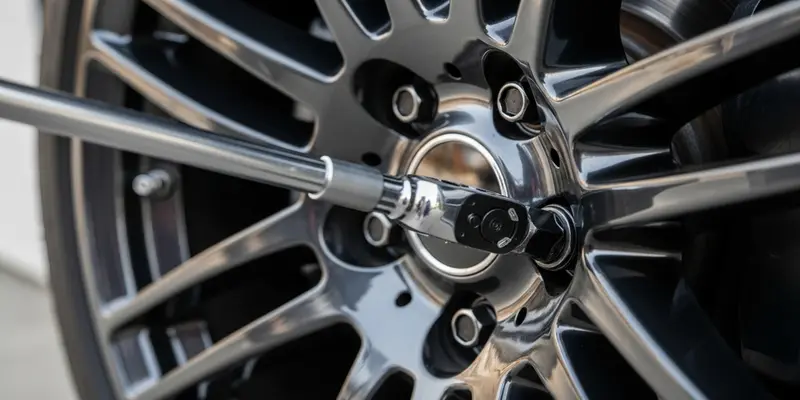
You’re doing 70 on the freeway when the steering wheel starts to stutter. It’s subtle at first—a rhythmic vibration that feels like a poorly balanced tire. Then the “clack-clack” begins. By the time you realize your loose or missing lug nuts are the culprit, you’re seconds away from watching your own wheel overtake you in the fast lane. This isn’t just a maintenance oversight; it’s a catastrophic safety failure waiting to happen.
The Illusion of the “Professional” Tighten
Most drivers assume that once a mechanic zips those nuts on with a pneumatic impact wrench, they are set for life. That is a dangerous lie. Even the best shops can make mistakes, and more importantly, physics doesn’t care about your mechanic’s reputation.
When a wheel is mounted, the surfaces between the wheel and the hub need to seat perfectly. Small particles of rust, dirt, or even paint can compress over the first few miles of driving. As these particles flatten, the clamping force drops. Your “tight” lug nuts are suddenly finger-loose.
Why the 100-Mile Rule is Non-Negotiable
The 100-mile rule is simple: after any service where the wheels were removed, you must re-torque the lug nuts after 50 to 100 miles of driving.
- Thermal Expansion: Your brakes and hubs get hot. This heat causes metal to expand and contract, which can wiggle a nut loose if it wasn’t perfectly seated.
- Vibration: Constant road vibration acts like a slow-motion wrench, backing off nuts that haven’t reached their final “set.”
- The Habit: I recommend checking them every single time you check your tire pressure. If you’re checking your air, you’re already at the wheel. Grab a wrench.
A Near-Disaster on the I-15
I learned this lesson the hard way three years ago. I had just swapped my winter tires onto my old SUV. I was in a rush, heading up into the mountains for a weekend trip. About sixty miles in, I noticed a faint wobble. I brushed it off as a windy day.
Ten miles later, the wobble became a violent shudder. I pulled over onto a narrow, gravel shoulder. When I checked the front-left wheel, three of the five lug nuts were missing entirely. The remaining two were held on by a few threads. I could smell the hot metal where the wheel had been grinding against the studs. If I had gone another five miles, that wheel would have snapped off, likely flipping the vehicle. I spent an hour in the freezing wind, scavenging one nut from each of the other wheels just to limp to a gas station. I never leave home without a torque wrench now.
How to Build the Ultimate Safety Routine
You don’t need to be a mechanic to stay safe. You just need to stop being lazy about your walk-arounds.
- Buy a Torque Wrench: Don’t rely on the flimsy L-shaped iron in your trunk. A real torque wrench allows you to hit the exact foot-pounds specified in your manual.
- The Visual Scan: Look for “bleeding” rust or clean streaks emanating from a lug nut. This is a tell-tale sign that the nut is moving.
- The Pressure-Lug Combo: Make it a rule—every time you put air in your tires, you put a wrench on your nuts. It takes 60 seconds and could save your life.
Conclusion
Modern cars are marvels of engineering, but they still rely on basic friction to keep the shiny side up. Don’t delegate your life to a shop’s busy afternoon. Take ownership of your machine. Check your lugs, follow the 100-mile rule, and drive with the peace of mind that your wheels are actually going to stay where they belong.
FAQs
Q: How tight should my lug nuts be? A: Every vehicle has a specific torque spec, usually between 80 and 120 lb-ft. Check your owner’s manual; don’t guess.
Q: Can I just use a regular wrench and tighten them as hard as I can? A: No. Over-tightening can stretch or snap the studs, which is just as dangerous as having them loose.
Q: Why do shops use impact guns if they aren’t reliable? A: Impact guns are fast, but a quality shop will always follow up with a manual torque wrench to ensure accuracy.
Q: Does it matter what order I tighten them in? A: Yes. Always use a star pattern (cross-pattern) to ensure the wheel sits flush against the hub.
Q: What are the signs of a loose wheel while driving? A: Look for steering wheel vibration, a rhythmic clicking or thumping sound, or a feeling that the car is “wandering.”
Q: Should I lubricate the lug nut threads? A: Generally, no. Most torque specs are for “dry” threads. Adding grease can lead to over-torquing and accidental loosening.